
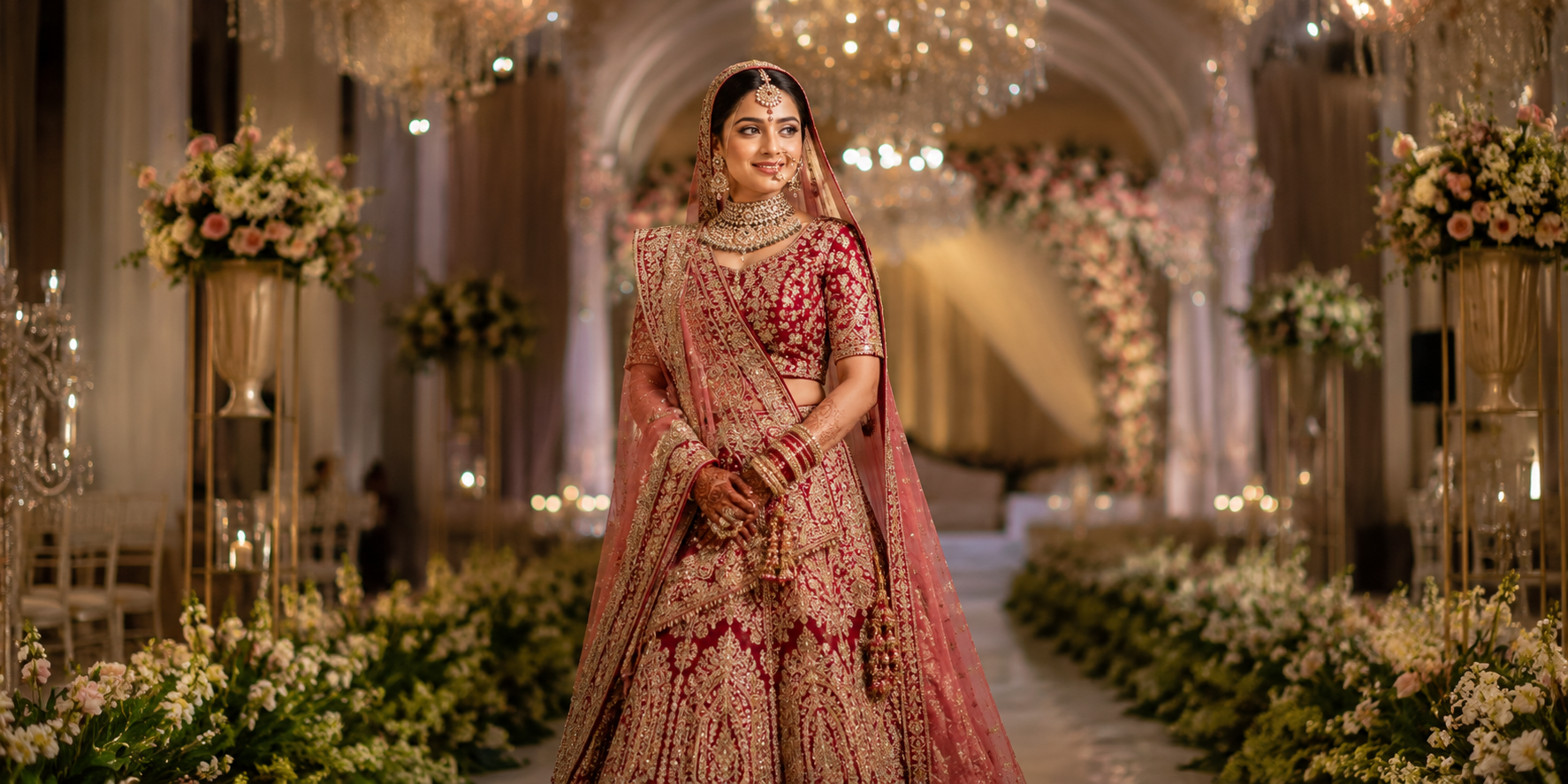
Bridal Lehenga fashion in India continues to evolve with modern styling, luxurious fabrics, and timeless traditional craftsmanship. Today’s brides want outfits that feel elegant, comfortable, and visually stunning while still reflecting Indian wedding traditions.
From royal red ensembles to pastel designer pieces, bridal fashion has become more personalized than ever. Brides are now choosing lehengas based on wedding themes, body type, seasonal comfort, and personal style preferences. In addition, modern designers are blending traditional embroidery with contemporary silhouettes to create outfits that stand out beautifully.
Whether you are planning a grand destination wedding or a classic traditional ceremony, understanding the latest lehenga trends can help you choose the perfect bridal look.
1. Latest Bridal Lehenga Color Trends
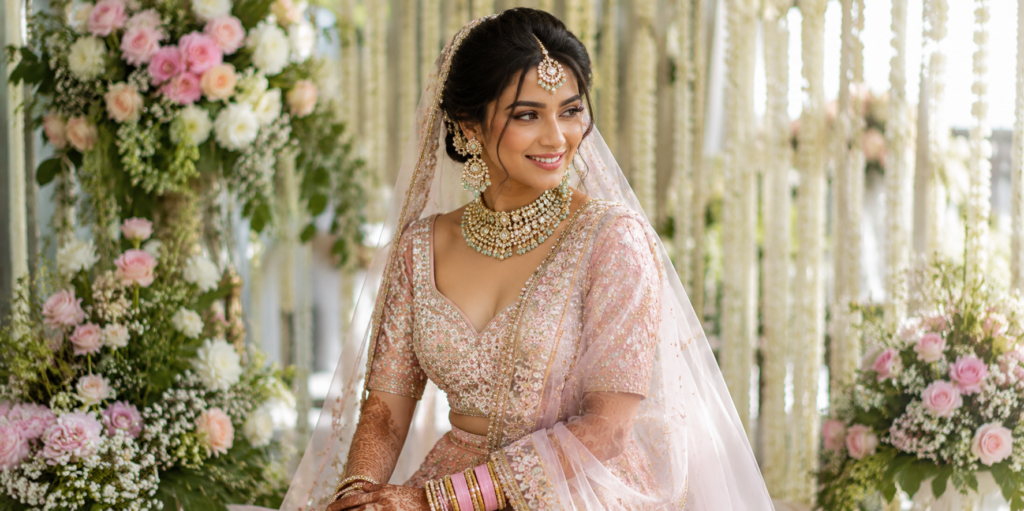
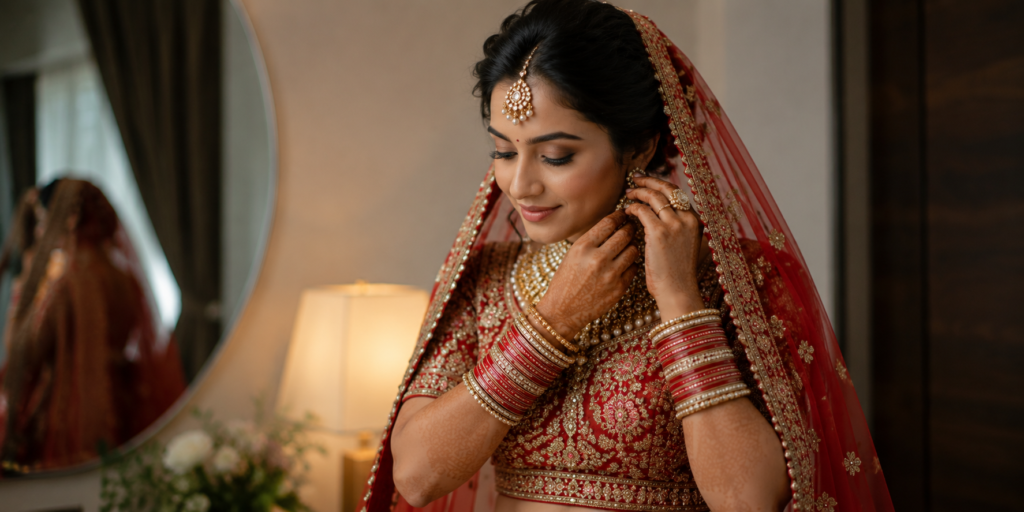
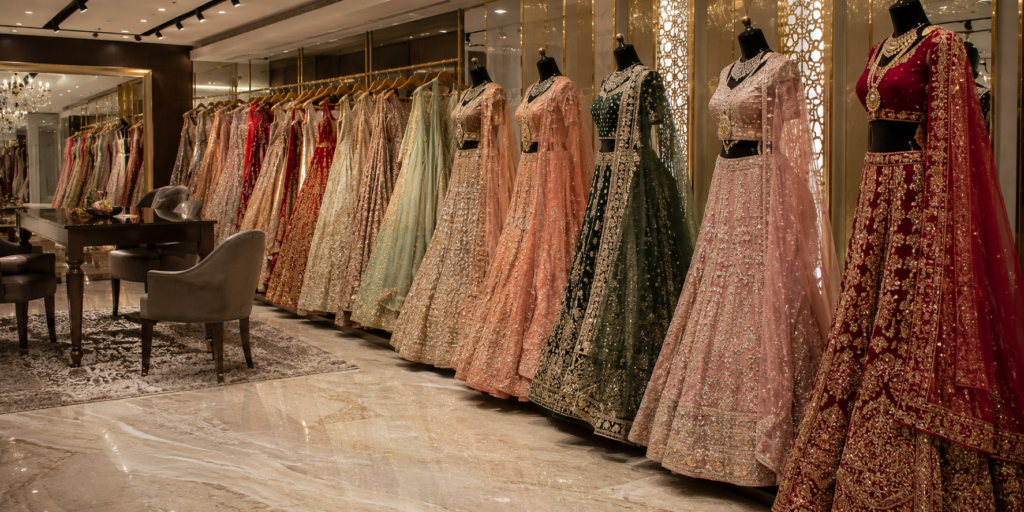
Traditional red remains one of the most loved choices for Indian weddings. However, modern brides are also exploring softer shades like blush pink, ivory, peach, champagne gold, and pastel lavender. These colors create a graceful and contemporary bridal appearance while maintaining the richness of Indian wedding fashion.
Deep jewel tones such as emerald green, wine, navy blue, and rust orange are also becoming popular for winter weddings. They photograph beautifully under natural and evening lighting, making them ideal for grand celebrations.
Another growing trend is monochrome bridal styling, where the blouse, skirt, and dupatta follow similar shades for a sophisticated finish.
2. Popular Fabrics for Bridal Lehengas
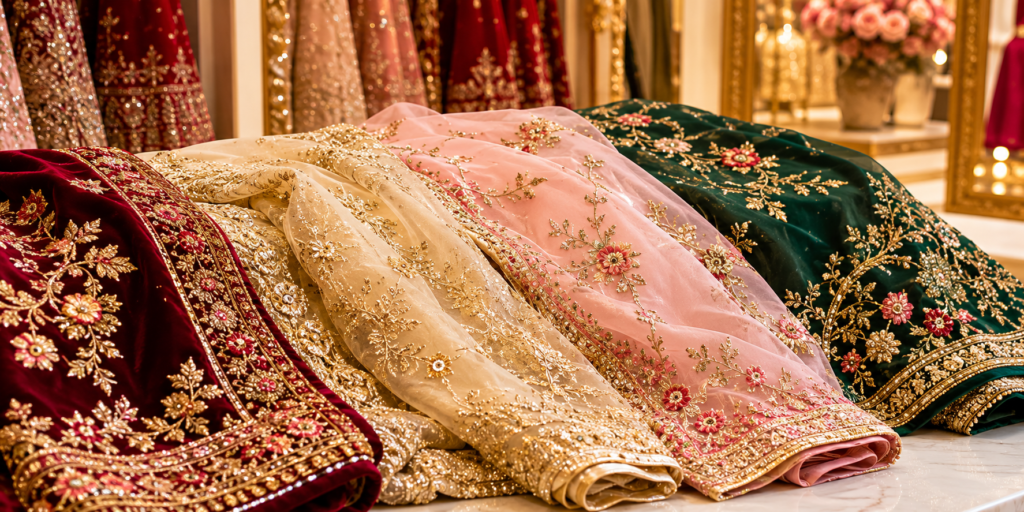
Fabric selection plays a major role in the overall comfort and appearance of a bridal outfit. Velvet lehengas continue to dominate winter weddings because of their royal texture and rich finish. On the other hand, lightweight fabrics like georgette, organza, and net are preferred for summer ceremonies.
Silk remains timeless because it combines elegance with durability. Raw silk and Banarasi silk bridal outfits are especially popular among brides who want a traditional look with premium craftsmanship.
The table below highlights common fabrics and their ideal use.
| Fabric Type | Best For | Key Feature |
|---|---|---|
| Velvet | Winter Weddings | Rich and royal appearance |
| Organza | Day Weddings | Lightweight and elegant |
| Silk | Traditional Ceremonies | Timeless and luxurious |
| Georgette | Reception Looks | Comfortable movement |
| Net | Designer Styles | Modern layered look |
Choosing the right fabric helps brides stay comfortable throughout long wedding events while maintaining a polished appearance.
3. Embroidery Styles Brides Prefer
Embroidery defines the beauty of a Bridal Lehenga. Traditional Indian handwork such as zari, zardozi, mirror work, gota patti, and resham embroidery continues to dominate wedding collections across the country.
Modern brides often prefer intricate floral embroidery with subtle shimmer instead of heavily overloaded designs. This creates a balanced and refined bridal appearance.
Furthermore, handcrafted embroidery adds uniqueness and luxury to bridal outfits. Designers now combine traditional patterns with modern motifs to create fashionable yet culturally rooted lehengas.
Mirror work lehengas are especially trending for destination weddings and sangeet functions because they reflect light beautifully during evening celebrations.
4. Modern Bridal Lehenga Silhouettes
Lehenga silhouettes have changed significantly over the years. While traditional flared lehengas remain popular, modern brides are exploring newer cuts and styling formats.
A-line lehengas are preferred for their elegant structure and universally flattering fit. Mermaid-style lehengas are gaining popularity among brides who want a glamorous reception look. Layered lehengas with lightweight cancan provide volume without making the outfit uncomfortable.
In addition, jacket-style lehengas and cape dupattas are becoming fashionable alternatives to traditional draping styles.
Brides today prioritize comfort alongside beauty. Therefore, lighter lehenga construction and flexible stitching techniques are becoming important features in designer collections.
5. Bridal Lehenga Styling Tips
Selecting the right lehenga is only one part of achieving a perfect bridal look. Styling choices also make a major difference.
Choose Jewelry Carefully
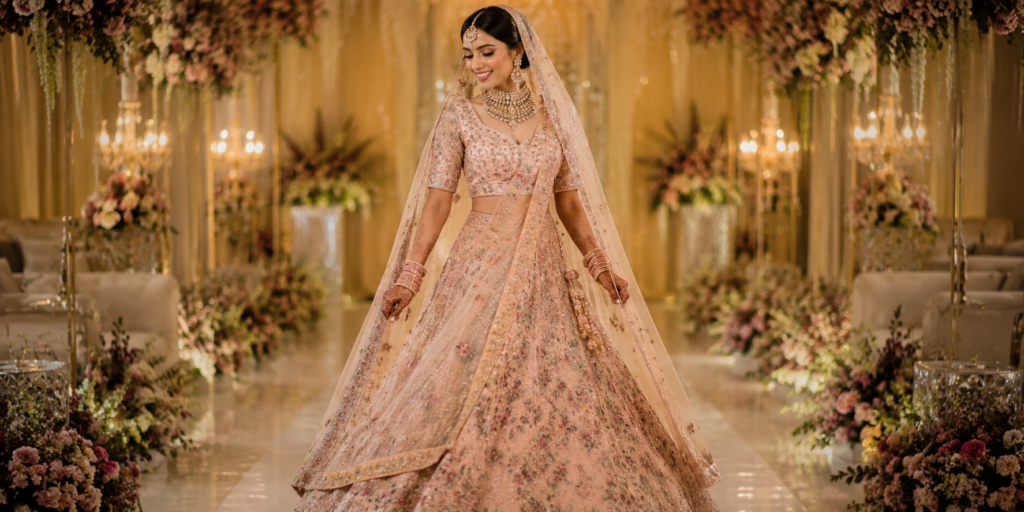
Heavy jewelry pairs beautifully with minimal lehenga designs, while heavily embroidered outfits work best with balanced accessories. Brides should avoid over-layering jewelry because it can overpower the outfit.
Focus on Dupatta Draping
Dupatta styling significantly affects bridal appearance. Double dupatta draping remains popular for traditional weddings, while shoulder cape styles create a modern look.
Prioritize Comfort
Brides should always try their lehenga while walking and sitting before final fittings. Comfortable outfits allow better movement throughout long wedding rituals and photo sessions.
Match Makeup with Lehenga Tone
Warm-toned lehengas pair well with golden makeup palettes, whereas pastel bridal outfits complement soft and natural makeup looks.
6. Choosing a Bridal Lehenga by Wedding Function
Different wedding functions require different lehenga styles. Brides now prefer customized outfits for each ceremony instead of wearing similar looks throughout the wedding.
For engagement ceremonies, lighter embellished lehengas with pastel tones are highly preferred. Mehendi events often feature floral prints and lightweight fabrics for comfort.
Sangeet outfits usually include glamorous sequins and mirror work because they enhance stage lighting and dance performances. Reception lehengas, meanwhile, focus more on modern silhouettes and elegant detailing.
Traditional wedding ceremonies continue to favor classic reds, maroons, and gold embroidery because of their cultural significance.
7. Bridal Lehenga Trends for 2026
The upcoming bridal fashion season is expected to focus on personalization and sustainability. Brides are increasingly choosing handcrafted outfits made by local artisans and designer studios.
Minimal luxury is another strong trend. Instead of excessive embellishments, modern bridal fashion is moving toward refined embroidery, clean tailoring, and premium fabrics.
Custom bridal veils, detachable dupattas, and lightweight layered lehengas are also expected to dominate upcoming wedding collections.
Additionally, vintage-inspired lehengas with heritage embroidery patterns are returning to fashion. These designs beautifully combine traditional Indian artistry with modern bridal elegance.
Conclusion
Bridal Lehenga trends for Indian weddings continue to blend tradition with modern elegance. Today’s brides want outfits that not only look beautiful but also feel comfortable and personal to their wedding vision.
From luxurious fabrics and detailed embroidery to modern silhouettes and pastel shades, bridal fashion now offers endless possibilities. Choosing the right lehenga depends on wedding style, comfort, personality, and cultural preferences.
A thoughtfully selected bridal outfit helps create timeless wedding memories while reflecting confidence and individuality on the special day.
Red remains the traditional favorite for Indian weddings, but pastel shades, ivory, emerald green, and wine tones are also trending among modern brides.
Georgette, organza, and lightweight silk fabrics are comfortable for long wedding functions while still offering an elegant bridal appearance.
Brides should ideally purchase their bridal lehenga at least 2–3 months before the wedding to allow enough time for fittings and custom alterations.
