

Biometric attendance has transformed the way organizations record and manage employee attendance. Instead of relying on manual registers, punch cards, or passwords, businesses now use biometric technology to verify employee identity through unique physical characteristics such as fingerprints, facial recognition, or iris scans.
An efficient attendance management system is essential for every organization, regardless of its size. Accurate attendance records help businesses improve payroll processing, monitor employee working hours, reduce administrative workload, and maintain workplace discipline. Traditional attendance methods often lead to errors, proxy attendance, and time theft, while biometric systems provide reliable and tamper-resistant records.
Today, many companies, educational institutions, hospitals, manufacturing units, and government organizations have adopted biometric attendance systems to increase operational efficiency. With cloud connectivity and real-time reporting, HR teams can easily monitor attendance from anywhere and generate detailed reports whenever required.
In this guide, you’ll learn how biometric attendance works, its key features, benefits, applications, and the factors to consider before choosing the right system for your organization.
How Does a Biometric Attendance System Work?
A biometric attendance system captures an employee’s unique biometric data during registration. This data is converted into an encrypted digital template and stored securely in the system.
When an employee checks in or checks out, the device scans the fingerprint, face, or iris again. It compares the live scan with the stored template within seconds.
If both records match, the system automatically marks the attendance with the exact date and time. The entire process is quick, secure, and requires no manual intervention.
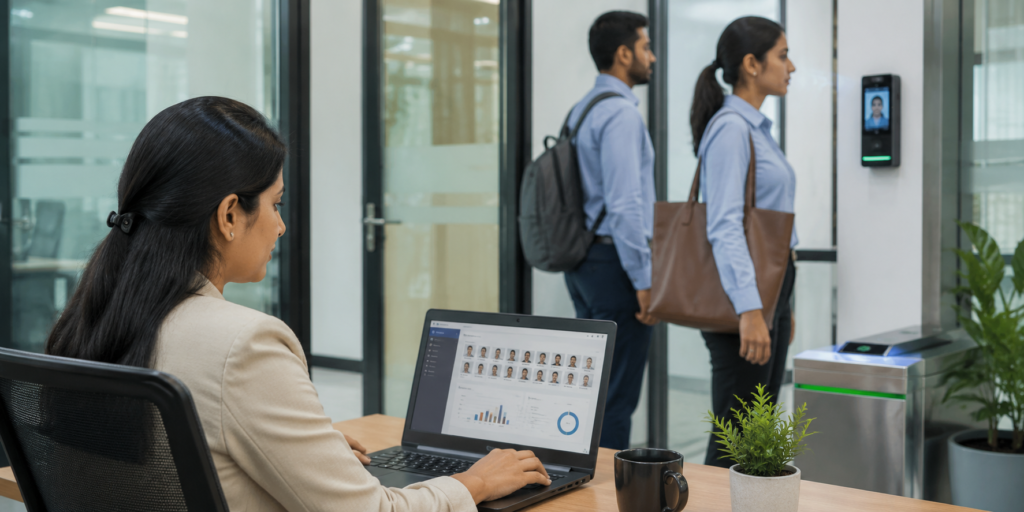
Most modern systems are connected to cloud software. This allows HR managers to access attendance reports, monitor employee shifts, and manage records from anywhere.

Types of Biometric Attendance Systems
Different organizations choose different biometric technologies based on their security needs and budget.
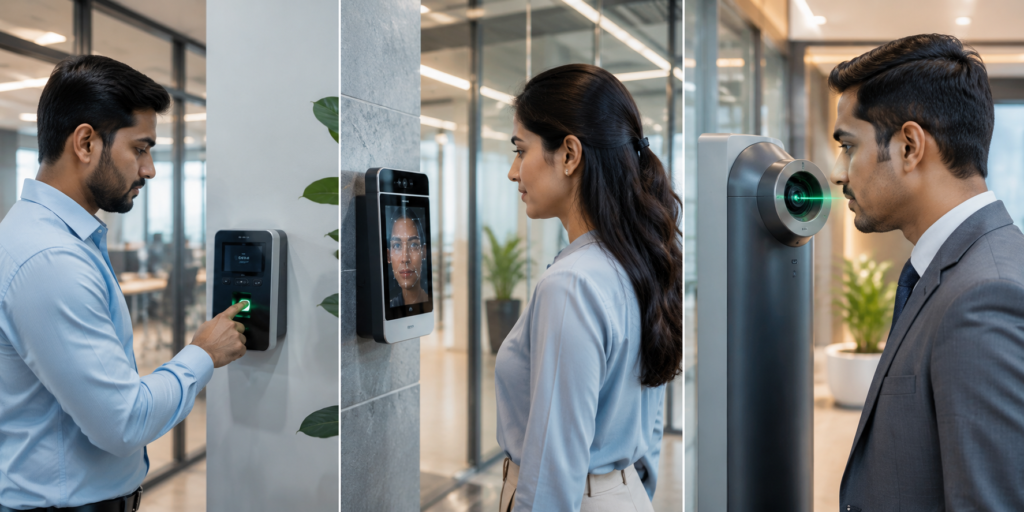
Fingerprint Attendance System
Fingerprint devices are the most widely used biometric attendance solution. They are affordable, easy to install, and suitable for small to large businesses.
Face Recognition Attendance System
Face recognition identifies employees without physical contact. It is fast, hygienic, and ideal for workplaces with high employee traffic.
Iris Recognition System
Iris recognition scans the unique pattern of an employee’s eye. It offers high security and is commonly used in government offices and research facilities.
Palm Vein Recognition
Palm vein technology verifies identity by scanning the vein pattern inside the hand. It provides excellent accuracy and is difficult to duplicate.
Benefits of Biometric Attendance
Businesses prefer biometric attendance because it improves both accuracy and efficiency.
| Benefit | Business Advantage |
|---|---|
| Accurate Attendance | Eliminates manual errors |
| Prevents Buddy Punching | Stops proxy attendance |
| Faster Payroll | Automatic attendance reports |
| Better Security | Only authorized employees can mark attendance |
| Real-Time Monitoring | HR can track attendance instantly |
Biometric systems save valuable administrative time by automating attendance records. HR teams no longer need to verify paper registers or manually calculate working hours.
Another major advantage is payroll accuracy. Since attendance data is recorded automatically, salary calculations become more reliable and transparent.
In addition, businesses receive detailed attendance reports that help improve workforce planning, shift management, and employee productivity.
Industries That Use Biometric Attendance
Today, biometric attendance is used across many industries because it offers accurate attendance records and better workforce management.
Corporate Offices
Companies use biometric systems to track employee working hours, manage shifts, and improve payroll accuracy. It also helps HR teams generate reports quickly.
Manufacturing Units
Factories often have multiple shifts and large workforces. Biometric attendance ensures every employee’s entry and exit is recorded correctly.
Educational Institutions
Schools, colleges, and universities use biometric devices to monitor staff attendance. Some institutions also use them to record student attendance.
Hospitals
Hospitals operate around the clock. Biometric systems help manage doctors, nurses, and support staff working in different shifts.
Government Organizations
Government departments use biometric attendance to improve transparency, reduce absenteeism, and maintain secure attendance records.

Challenges and Best Practices
Although biometric attendance offers many benefits, businesses should follow best practices for smooth implementation.
Poor-quality fingerprint scans or improper device placement may slow down verification. Regular maintenance keeps the devices accurate and reliable.
Employee biometric data should always be encrypted and stored securely. Organizations should also follow local privacy and data protection regulations.
Training employees before implementation helps them understand how to use the system correctly. This reduces confusion and improves adoption.
Regular software updates, secure backups, and cloud synchronization further improve system performance and data security.

Conclusion
Biometric attendance has become an essential technology for organizations that want accurate, secure, and efficient employee attendance management. It reduces manual errors, prevents proxy attendance, and simplifies payroll processing.
Modern biometric systems also provide real-time monitoring, detailed reports, and seamless integration with HR software. These features help businesses save time while improving workforce productivity.
Whether you run a small business or a large enterprise, investing in the right biometric attendance system can streamline daily operations and support long-term organizational growth.
A biometric attendance system records employee attendance using unique physical characteristics such as fingerprints or facial recognition. It provides accurate and secure attendance records.
Yes. It reduces human errors, prevents buddy punching, improves payroll accuracy, and saves time by automating attendance management.
The best system depends on your business needs. Solutions with fingerprint, facial recognition, cloud access, payroll integration, and real-time reporting are suitable for most organizations.
