
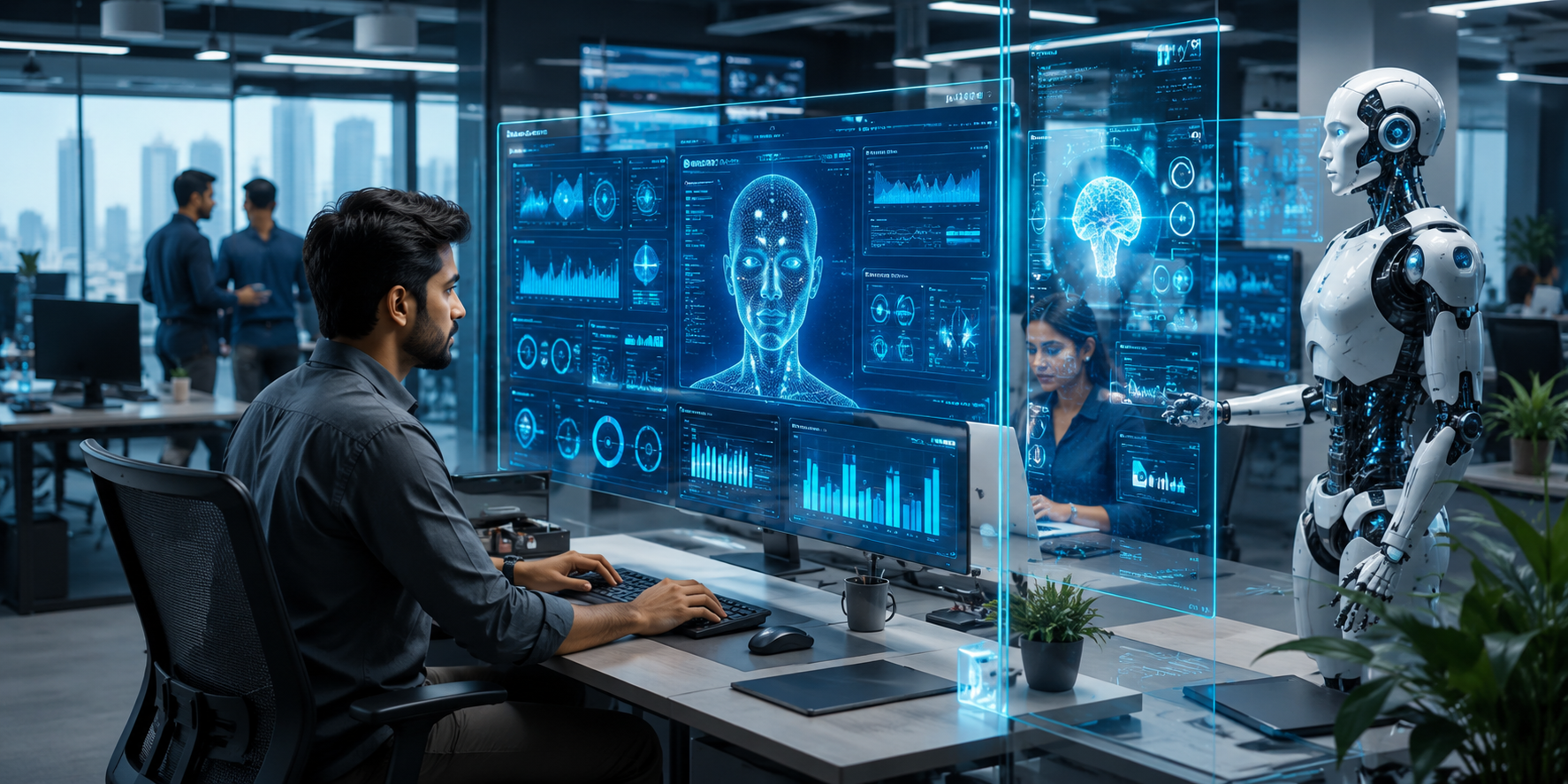
AI Technology is rapidly changing the way people live, work, and interact with the world. From smart assistants to advanced healthcare systems, artificial intelligence is now part of everyday life. Businesses are using intelligent automation to improve productivity, while consumers benefit from faster and smarter digital experiences.
In recent years, the growth of machine learning, robotics, and data analytics has pushed AI into nearly every industry. Moreover, companies are investing heavily in AI-powered tools because they improve efficiency, reduce errors, and create better customer experiences. As a result, AI is becoming one of the most important technological advancements of modern times.
1. AI Technology in Healthcare
Healthcare is one of the biggest sectors benefiting from artificial intelligence. Hospitals and clinics now use AI systems to detect diseases faster and improve patient care. Advanced algorithms can analyze medical scans and identify health conditions more accurately than traditional methods.
In addition, wearable health devices collect real-time health data and help doctors monitor patients remotely. This technology improves early diagnosis and allows faster treatment decisions.
Benefits of AI in Healthcare
| AI Application | Main Benefit |
|---|---|
| Medical Imaging | Faster disease detection |
| Virtual Health Assistants | 24/7 patient support |
| Predictive Analytics | Early risk identification |
| Robotic Surgery | Higher surgical precision |

Moreover, pharmaceutical companies are using AI to develop medicines faster. Drug discovery that once took years can now be completed in a shorter time with intelligent data analysis.
2. Smart Business Automation
Businesses across the world are adopting AI-powered automation to improve operations. Companies use AI chatbots for customer support, predictive analytics for sales forecasting, and automated systems for managing workflows.
Small businesses also benefit because automation reduces operational costs and saves time. For example, digital marketing agencies use AI tools for keyword research, content optimization, and customer targeting.
How Businesses Use AI
Customer Support
AI chatbots answer customer queries instantly and improve response times.
Marketing Optimization
Businesses use machine learning to understand customer behavior and create personalized campaigns.
Data Analysis
AI systems process large amounts of information and generate accurate insights quickly.
Furthermore, AI helps companies make smarter decisions based on real-time data instead of assumptions. Therefore, organizations become more competitive and efficient.
3. AI in Education and Learning
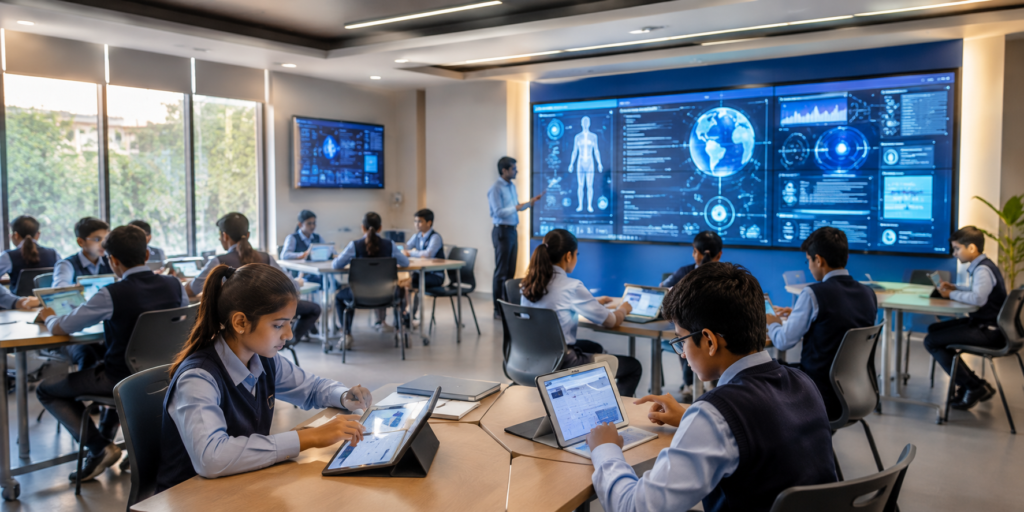
Education has evolved significantly because of intelligent learning systems. Students can now access personalized learning platforms that adapt according to their progress and understanding levels.
AI-powered applications also help teachers automate grading and administrative tasks. Consequently, educators can focus more on teaching and student interaction.
Personalized Learning Experience
Modern AI learning platforms recommend lessons based on student performance. This improves engagement and helps learners understand complex subjects more effectively.
In addition, language-learning apps powered by artificial intelligence provide real-time pronunciation correction and interactive exercises.

As online education continues to grow, AI will play a bigger role in creating smarter and more accessible learning experiences worldwide.
4. AI-Powered Cybersecurity
Cybersecurity threats are increasing every year, making AI-driven protection systems more important than ever. Traditional security systems often struggle to detect advanced cyberattacks quickly.
Artificial intelligence can analyze unusual behavior patterns and identify threats before major damage occurs. Moreover, AI systems continuously learn from new cyber risks, improving security over time.
Why AI Improves Cybersecurity
Real-Time Threat Detection
AI detects suspicious activities immediately and responds faster than manual systems.
Fraud Prevention
Banks and financial institutions use AI to identify fraudulent transactions instantly.
Advanced Monitoring
Intelligent security tools monitor networks continuously without human intervention.

Therefore, organizations can protect sensitive customer information and maintain stronger digital security standards.
5. Intelligent Virtual Assistants
Virtual assistants have become an essential part of daily life. Smartphones, smart speakers, and business tools now use AI-powered voice assistants to perform tasks efficiently.
These systems understand voice commands, answer questions, schedule reminders, and even control smart home devices. In addition, natural language processing allows virtual assistants to communicate more naturally with users.
Popular Uses of Virtual Assistants
Smart Homes
Users can control lighting, appliances, and security systems through voice commands.
Workplace Productivity
AI assistants help schedule meetings, organize emails, and manage tasks.
Customer Experience
Brands use intelligent assistants to provide faster support services.

As technology improves, virtual assistants are expected to become even more accurate and human-like.
6. AI in Transportation
Transportation systems are becoming smarter through artificial intelligence. Self-driving vehicles, intelligent traffic systems, and route optimization technologies are improving travel efficiency.
AI-powered navigation systems analyze traffic conditions in real time and suggest faster routes. This reduces travel time and fuel consumption.
Smart Transportation Benefits
Reduced Traffic Congestion
AI systems optimize traffic signals and improve road management.
Improved Road Safety
Advanced driver-assistance systems help reduce accidents.
Better Logistics
Delivery companies use AI to optimize shipping routes and improve delivery speed.
Moreover, autonomous vehicles are being tested worldwide and may transform transportation in the future.
7. AI and Creative Industries
Artificial intelligence is now helping creative professionals in graphic design, music production, photography, and content creation. AI-powered tools can generate visuals, edit videos, and improve creative workflows.
For example, businesses use AI image generators to create marketing visuals quickly. Similarly, video editing software uses intelligent automation to simplify complex editing tasks.
AI in Content Creation
Graphic Design
AI tools help designers create layouts and branding concepts faster.
Video Editing
Automated editing features save time and improve production quality.
Content Writing
Writers use AI assistants for research, grammar improvement, and idea generation.
However, human creativity still remains essential because AI works best as a supportive tool rather than a complete replacement.
8. Future of AI Technology
The future of AI Technology looks extremely promising. Experts believe artificial intelligence will continue transforming industries such as healthcare, agriculture, finance, entertainment, and manufacturing.
Moreover, AI systems are becoming more intelligent, efficient, and accessible for businesses of all sizes. Governments and organizations are also creating ethical guidelines to ensure responsible AI development.
Emerging AI Trends
Generative AI
AI systems can now create text, images, videos, and music with impressive quality.
Human-AI Collaboration
Future workplaces will combine human creativity with machine intelligence.
Smarter Automation
Advanced AI will automate repetitive tasks while improving productivity.
As innovation continues, artificial intelligence will become deeply integrated into everyday life. Therefore, individuals and businesses that adapt to these changes will benefit the most from future technological growth.
Conclusion
AI Technology is no longer a futuristic concept because it already influences healthcare, education, business, cybersecurity, and transportation. These smart innovations are improving efficiency, enhancing convenience, and creating new opportunities across industries.
As artificial intelligence continues evolving, its impact will become even more significant in the coming years. Businesses, professionals, and consumers who understand and adopt AI-driven solutions will stay ahead in the rapidly changing digital world.
AI Technology is used for automation, data analysis, healthcare improvements, customer support, education, cybersecurity, and smart digital systems.
Yes, AI systems can improve security and efficiency when implemented responsibly with proper data protection and ethical guidelines.
AI may automate repetitive tasks, but human creativity, decision-making, and emotional intelligence will remain highly valuable in most industries.
