
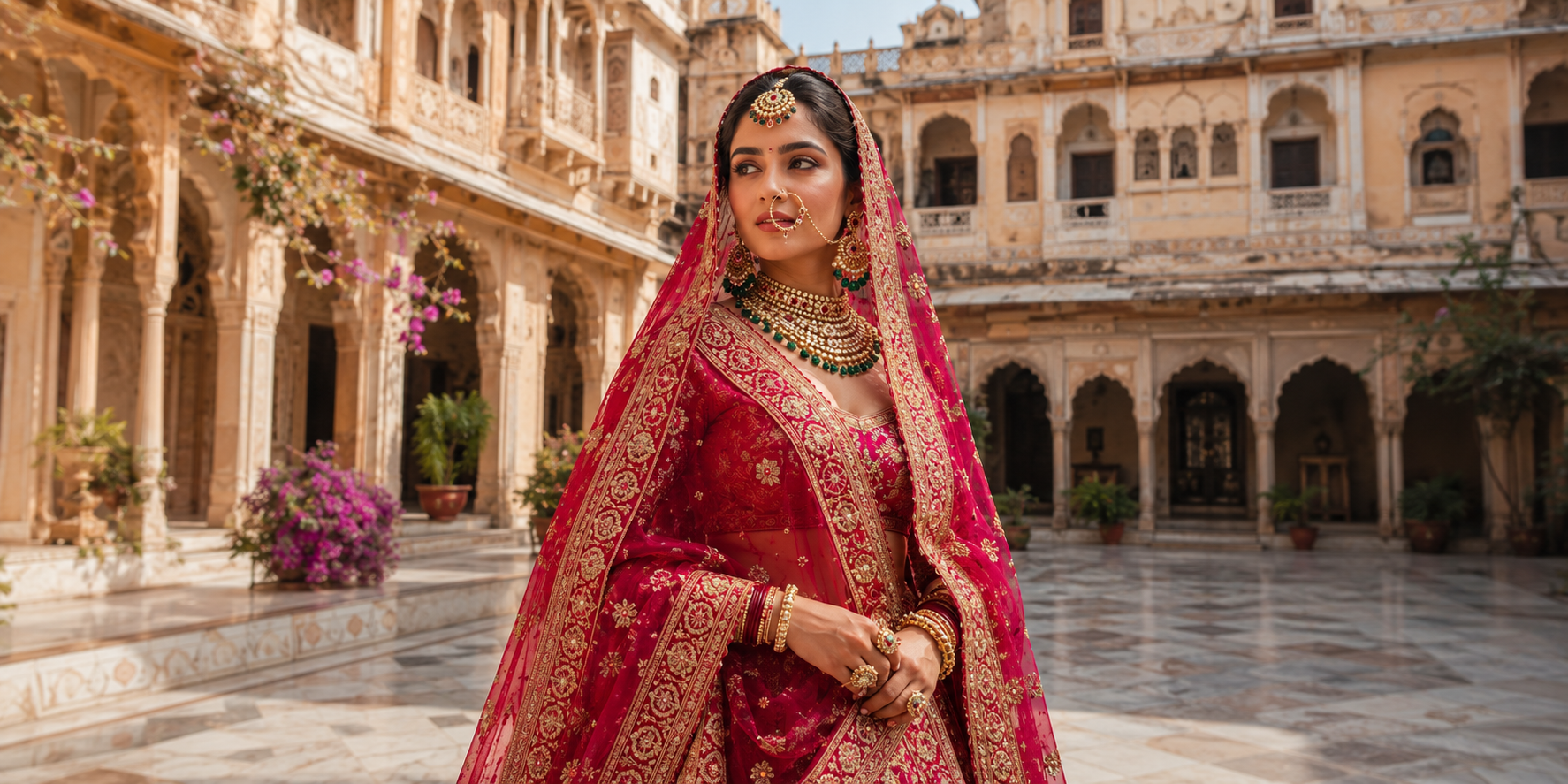
Rajasthani poshak is one of the most admired traditional wedding outfits in India. Known for its royal appearance, detailed craftsmanship, and cultural significance, this attire has been a symbol of elegance for generations. Whether it is a grand Rajput wedding or a festive family celebration, a well-designed poshak creates a timeless and graceful look.
Today, modern brides and wedding guests are embracing traditional styles while adding contemporary elements. As a result, the popularity of Rajasthani wedding fashion continues to grow across India. In this guide, we will explore the most beautiful designs, fabrics, colors, and styling ideas that make this traditional attire a favorite choice for weddings.
What Is a Rajasthani Poshak?
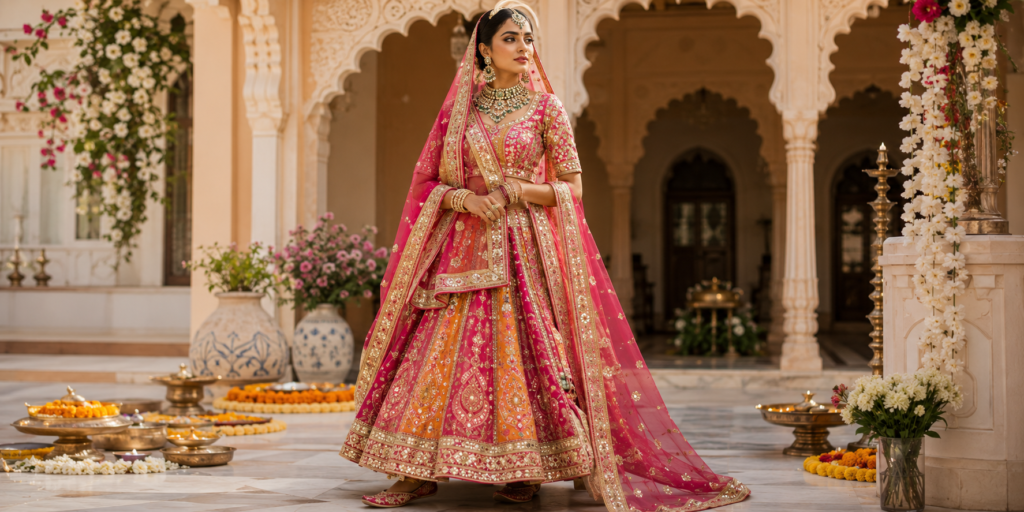
A Rajasthani poshak is a traditional outfit primarily worn by women in Rajasthan. It generally consists of a kurti, kanchli, and lehenga paired with a beautifully draped odhani. The outfit reflects the rich cultural heritage of Rajasthan and showcases exquisite embroidery, gota patti work, mirror work, and handcrafted detailing.
For centuries, royal families and Rajput communities have worn these garments during weddings and special occasions. Even today, the outfit remains a preferred choice for brides who want to honor tradition while looking elegant.
Why Is It Popular for Weddings?
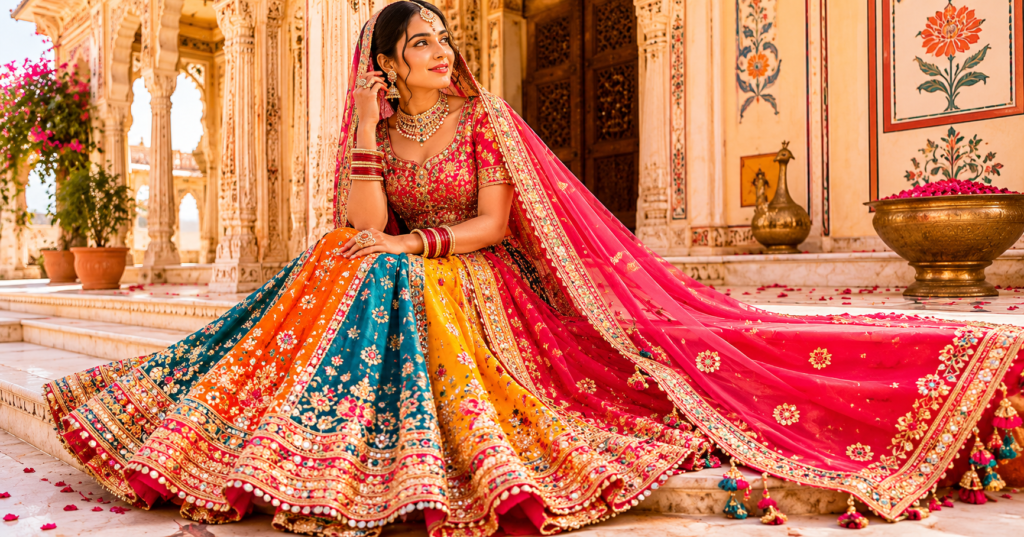
Wedding fashion is often about creating a memorable and timeless appearance. A traditional poshak offers exactly that. Its regal silhouette, vibrant color palette, and cultural significance make it stand out from modern bridal outfits.
Moreover, the outfit is versatile enough to suit brides, bridesmaids, family members, and wedding guests. The combination of elegance and tradition makes it one of the most cherished ethnic outfits for Indian weddings.
6 Beautiful Rajasthani Poshak Designs for Weddings
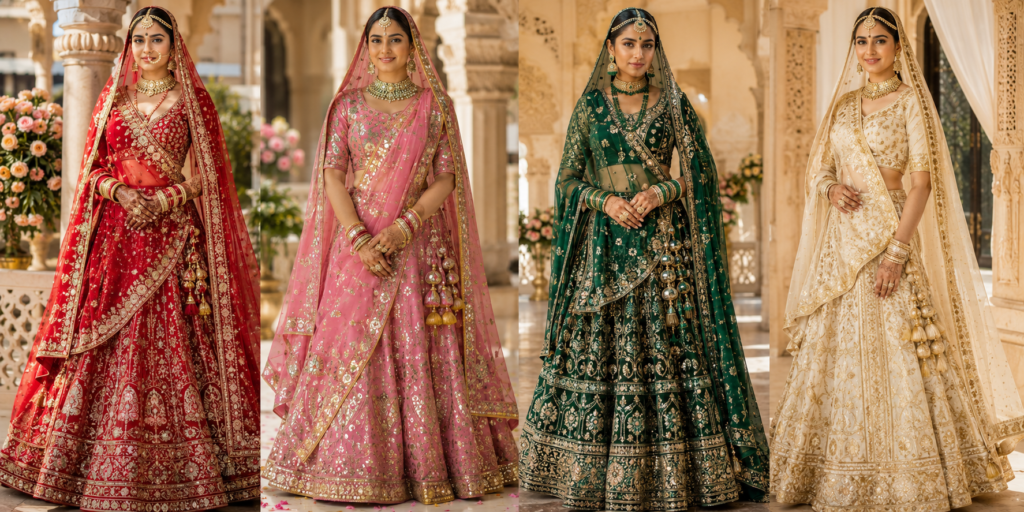
Royal Red Bridal Poshak
Red remains the most iconic color for Indian weddings. A red bridal poshak adorned with heavy zari embroidery and traditional jewelry creates a majestic appearance. This design is particularly popular among Rajput brides.
Maroon Velvet Poshak
Velvet fabric adds richness and sophistication. Maroon velvet outfits with gold embellishments are ideal for winter weddings and evening ceremonies.
Pink Gota Patti Poshak
Pink shades have become increasingly popular among modern brides. Gota patti detailing enhances the beauty of the outfit while maintaining a traditional aesthetic.
Ivory and Gold Designer Poshak
Brides seeking a contemporary touch often choose ivory and gold combinations. These outfits offer a refined and elegant appearance while preserving traditional elements.
Green Traditional Wedding Poshak
Green symbolizes prosperity and happiness. It is a wonderful choice for pre-wedding functions and cultural ceremonies.
Multi-Color Festive Poshak
For family members and wedding guests, multi-color designs provide a vibrant and celebratory look. These outfits perfectly reflect the colorful heritage of Rajasthan.
Choosing the Right Fabric and Colors
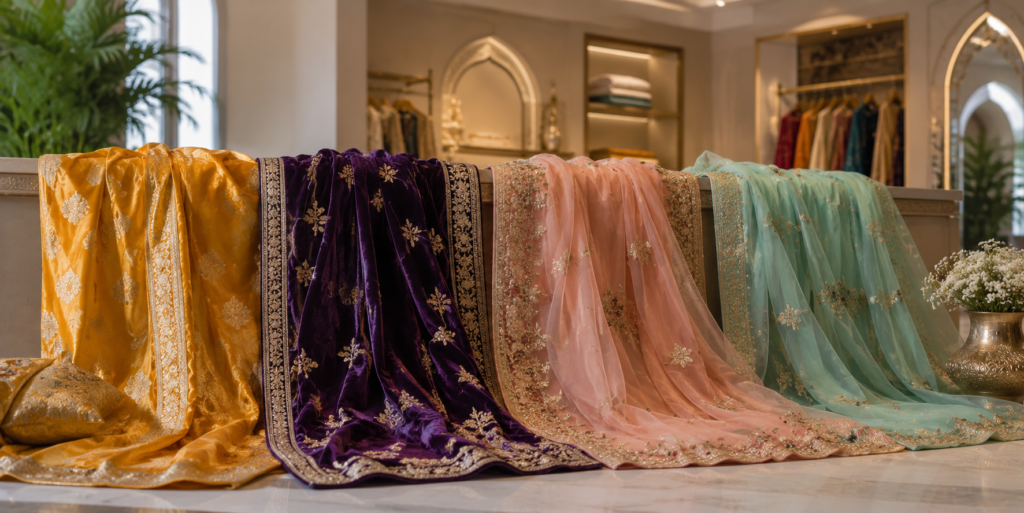
Selecting the appropriate fabric can significantly impact comfort and appearance. Different fabrics are suitable for different seasons and wedding functions.
| Fabric | Best For | Features |
|---|---|---|
| Silk | Bridal Wear | Rich and luxurious appearance |
| Velvet | Winter Weddings | Warm and elegant |
| Georgette | Day Functions | Lightweight and comfortable |
| Chiffon | Festive Events | Soft and flowing drape |
| Organza | Modern Weddings | Stylish and sophisticated |
When choosing colors, consider the wedding theme, season, and personal preferences. Traditional shades like red, maroon, green, and pink remain timeless choices.
Styling Tips for a Royal Wedding Look
Choose Traditional Jewelry
Kundan, polki, and jadau jewelry complement traditional outfits beautifully. These jewelry styles enhance the royal appeal of the attire.
Focus on Dupatta Draping
The odhani is an essential element of the outfit. Proper draping can dramatically improve the overall appearance and create a graceful silhouette.
Select Comfortable Footwear
Traditional juttis or embroidered sandals provide comfort while maintaining cultural authenticity.
Balance Makeup and Accessories
If the outfit features heavy embroidery, choose subtle makeup and balanced accessories. This approach helps maintain elegance without overwhelming the look.
Latest Trends in Rajasthani Wedding Fashion
Fashion trends continue to evolve, and traditional wedding wear is no exception. Designers are now blending heritage craftsmanship with modern aesthetics.
Popular trends include pastel color palettes, lightweight fabrics, contemporary embroidery patterns, and customized bridal outfits. Additionally, sustainable fashion practices are encouraging the use of handcrafted textiles and artisan-made embellishments.
These innovations allow brides to enjoy traditional beauty while embracing modern comfort and style.
How to Maintain Your Poshak
Proper maintenance ensures that your outfit remains beautiful for years. Always store it in a breathable garment bag and avoid direct sunlight. Delicate embroidery should be protected with soft fabric layers.
Professional dry cleaning is recommended after weddings or special events. Furthermore, periodic airing helps preserve fabric quality and prevents moisture damage.
Conclusion
Rajasthani poshak continues to be one of the most elegant choices for Indian weddings. Its royal heritage, intricate craftsmanship, and timeless appeal make it a favorite among brides and wedding attendees alike. Whether you choose a traditional red bridal outfit or a modern designer style, a well-crafted Rajasthani poshak can help you create a memorable and graceful wedding look that celebrates culture, beauty, and tradition.
A traditional poshak typically includes a lehenga, kurti, kanchli, and odhani. Together, these elements create the classic Rajasthani ethnic look.
Red, maroon, pink, and green are among the most popular bridal colors. The ideal choice depends on personal style and wedding traditions.
Yes. These outfits are suitable for festivals, engagement ceremonies, cultural events, family celebrations, and traditional gatherings.
