
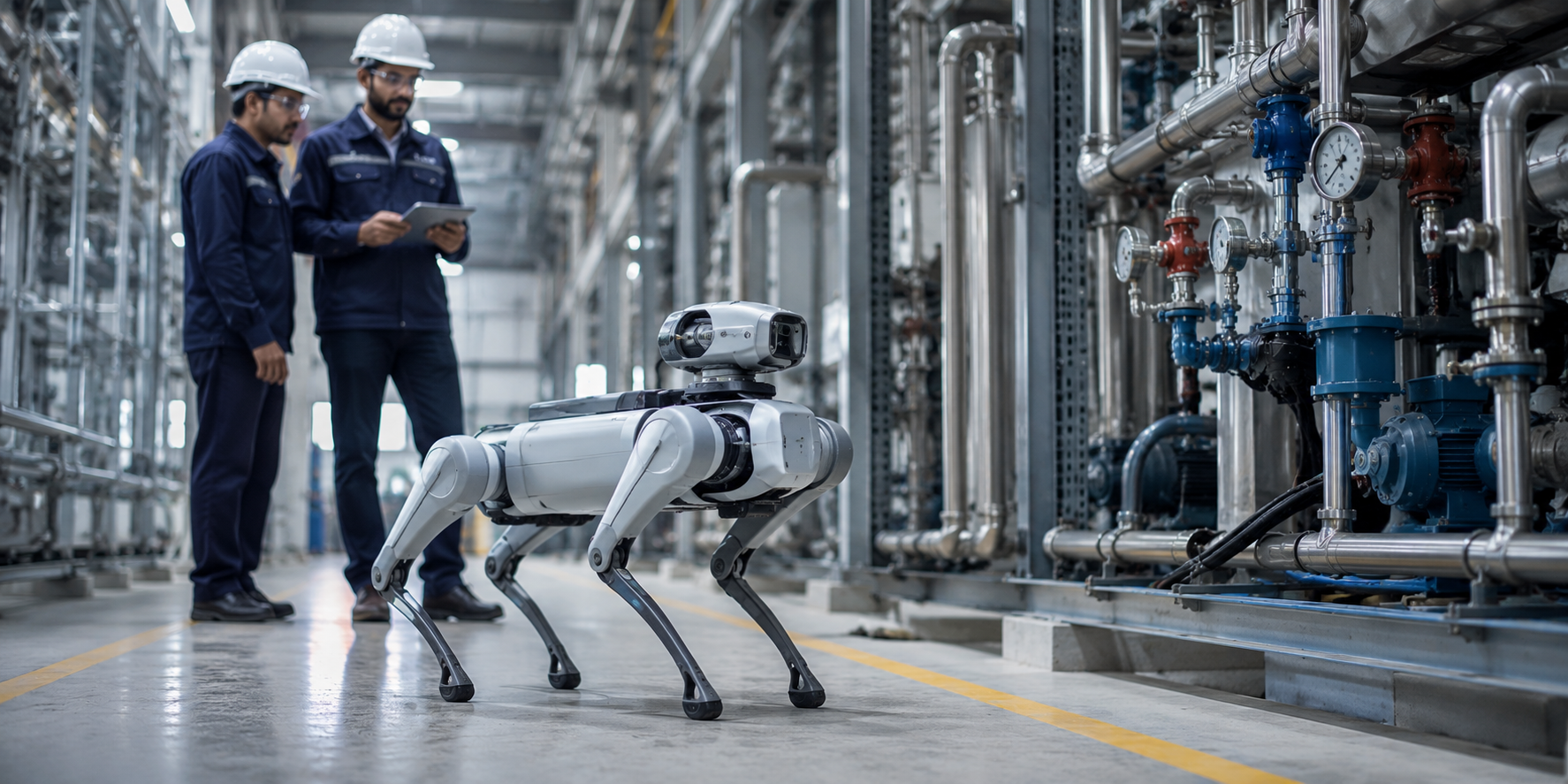
Robot dogs are becoming one of the most exciting innovations in modern technology. These intelligent four-legged machines combine artificial intelligence, sensors, cameras, and advanced mobility systems to perform tasks that are difficult, dangerous, or time-consuming for humans.
Over the last few years, robot dogs have moved beyond research laboratories and entered real-world industries. From inspecting factories and securing facilities to assisting emergency responders, these robotic systems are transforming how organizations operate. As technology continues to advance, their role in industrial automation and smart operations is expected to grow significantly.
What Are Robot Dogs?
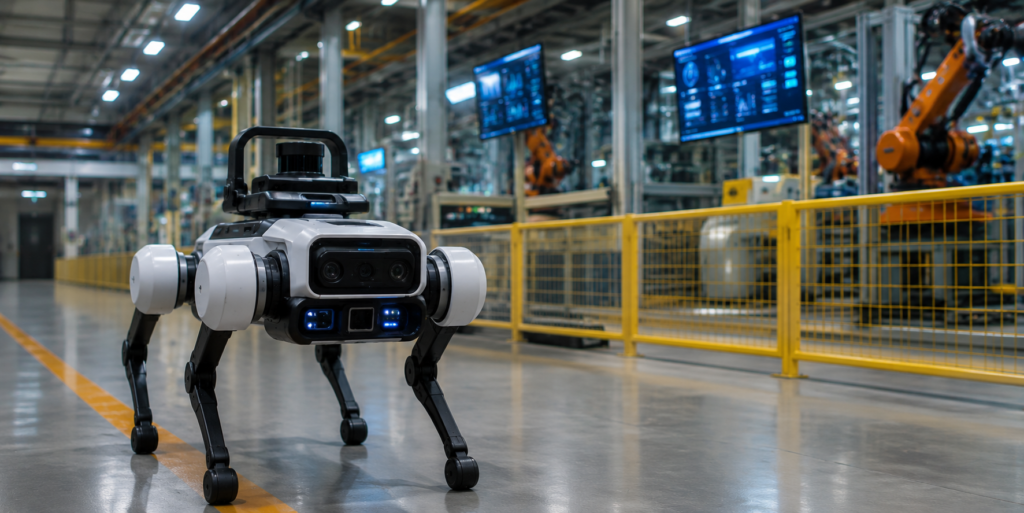
Robot dogs are mobile robotic machines designed to mimic the movement and agility of real dogs. Unlike traditional wheeled robots, they use four legs to navigate complex environments, climb stairs, cross uneven surfaces, and maintain stability in challenging conditions.
Most modern robotic dogs are equipped with artificial intelligence, machine vision, GPS systems, thermal cameras, LiDAR sensors, and wireless communication technologies. These features enable them to operate efficiently in industrial, commercial, and outdoor environments.
Organizations across manufacturing, energy, logistics, and security sectors are increasingly investing in robotic mobility solutions because of their flexibility and reliability.
Key Components of Robot Dogs
| Component | Function |
|---|---|
| AI Processor | Makes real-time decisions |
| Cameras | Captures visual information |
| LiDAR Sensors | Maps surroundings accurately |
| GPS Module | Supports navigation |
| Robotic Legs | Provides mobility on rough terrain |
| Wireless Connectivity | Enables remote monitoring |
How Robot Dogs Work
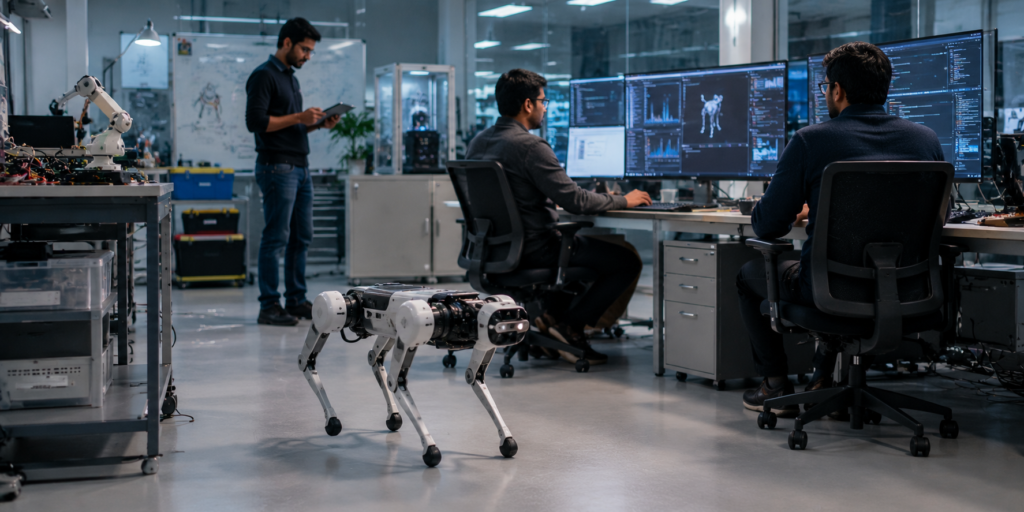
The intelligence of robot dogs comes from a combination of software and hardware systems working together. Advanced algorithms process information from cameras and sensors to understand the surrounding environment.
For example, when a robot encounters an obstacle, its AI system analyzes the situation and calculates the safest route. This allows the machine to move independently without constant human control.
Moreover, machine learning enables robotic systems to improve performance over time. As they gather more data, they become better at recognizing objects, navigating environments, and responding to changing conditions.
The integration of cloud computing and edge processing has further enhanced their capabilities. Companies can now monitor robotic operations remotely and receive real-time insights from multiple locations.
Industrial Inspection and Monitoring
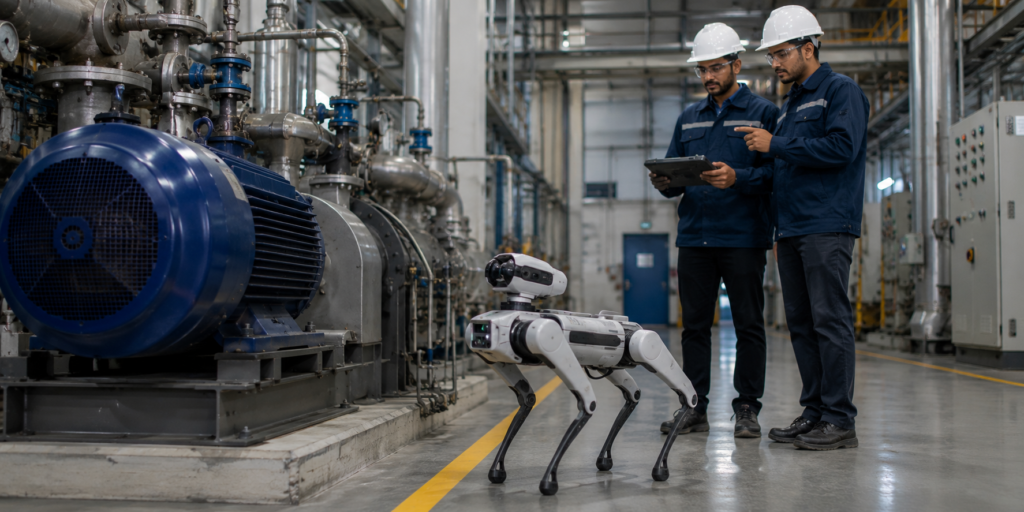
One of the most valuable uses of robot dogs is industrial inspection. Large facilities such as factories, power plants, and oil refineries require regular inspections to ensure safety and operational efficiency.
Traditionally, human workers had to perform these inspections manually, which could be risky in hazardous environments. Robot dogs reduce these risks by entering areas with extreme temperatures, toxic gases, or difficult terrain.
Using high-resolution cameras and thermal imaging systems, these robots can identify equipment issues before they become major problems. As a result, organizations can reduce downtime and maintenance costs.
Many industrial companies now use robotic inspections as part of their predictive maintenance strategies.
Security and Surveillance Applications
Security is another area where robot dogs are making a significant impact. Large campuses, warehouses, airports, and industrial facilities often require continuous monitoring.
Unlike fixed security cameras, robotic patrol units can move around and inspect different locations. Equipped with cameras, night vision systems, and environmental sensors, they provide enhanced situational awareness.
Furthermore, these robots can operate around the clock without fatigue. Security teams receive instant alerts when unusual activity is detected, allowing for faster responses to potential threats.
Because of their mobility and intelligent monitoring capabilities, many organizations view robotic security systems as an important addition to modern surveillance strategies.
Emergency Response and Disaster Management
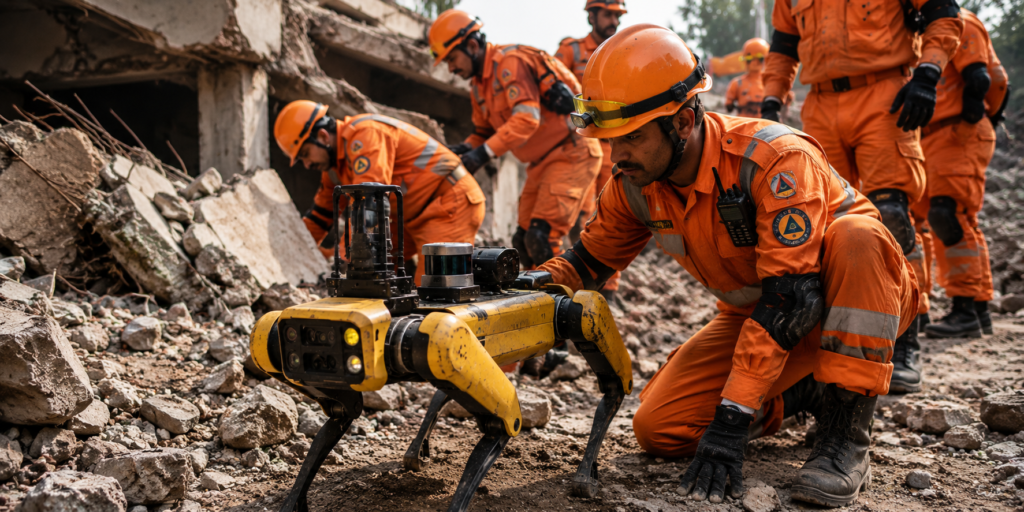
Emergency situations often involve dangerous conditions that put human responders at risk. Robot dogs help reduce these risks by entering hazardous environments before rescue teams arrive.
For example, after earthquakes, industrial accidents, or fires, robotic systems can explore damaged structures and collect critical information. Their cameras and sensors help identify hazards, locate survivors, and assess structural damage.
In addition, their ability to navigate debris and uneven surfaces makes them highly effective in disaster response operations. As emergency technologies continue to evolve, robotic assistance is becoming an essential part of public safety planning.
AI and Autonomous Navigation
Artificial intelligence is the driving force behind modern robotic mobility. Through AI-powered navigation systems, robot dogs can understand their surroundings and move independently.
These systems combine computer vision, sensor fusion, and machine learning to create detailed maps of the environment. Consequently, robotic units can avoid obstacles, select efficient routes, and adapt to unexpected situations.
Some advanced models can even recognize specific objects, identify equipment abnormalities, and interact with other automated systems. This level of intelligence allows organizations to automate repetitive tasks while maintaining high accuracy.
As AI technology improves, autonomous capabilities will continue to expand, making robotic systems even more useful across industries.
Benefits and Challenges
Robot dogs offer several advantages that make them attractive for industrial use.
Benefits
- Improved workplace safety
- Reduced operational costs
- Enhanced inspection accuracy
- Continuous monitoring capabilities
- Better access to hazardous locations
- Increased productivity
Challenges
- High initial investment
- Technical maintenance requirements
- Battery life limitations
- Data security concerns
- Need for specialized training
Despite these challenges, ongoing advancements in robotics and artificial intelligence are steadily improving performance while reducing costs.
The Future of Robot Dogs
The future of robot dogs looks highly promising. As robotics technology becomes more affordable and sophisticated, adoption is expected to increase across multiple sectors.
Future developments may include longer battery life, improved AI decision-making, enhanced communication systems, and greater autonomy. Businesses will likely use robotic systems for inspections, logistics support, security operations, and infrastructure monitoring on a larger scale.
Moreover, integration with smart factories, Internet of Things (IoT) devices, and cloud-based platforms will create more connected and efficient industrial ecosystems.
Organizations that embrace robotic innovation today are positioning themselves for a more automated and data-driven future.
Conclusion
Robot dogs are transforming industries through advanced mobility, artificial intelligence, and automation capabilities. From industrial inspections and security patrols to disaster response and autonomous navigation, these robotic systems are solving real-world challenges across multiple sectors.
As technology continues to evolve, robot dogs will play an increasingly important role in improving safety, efficiency, and operational performance. Their growing adoption demonstrates how robotics is reshaping modern industries and creating new opportunities for innovation.
Robot dogs are used for industrial inspections, security patrols, disaster response, infrastructure monitoring, and various automation tasks that require mobility and intelligence.
Yes. Most modern robot dogs use artificial intelligence, computer vision, and sensor technologies to navigate environments, analyze data, and perform autonomous tasks.
Manufacturing, energy, logistics, construction, public safety, defense, and security industries benefit significantly from robotic mobility solutions.
