
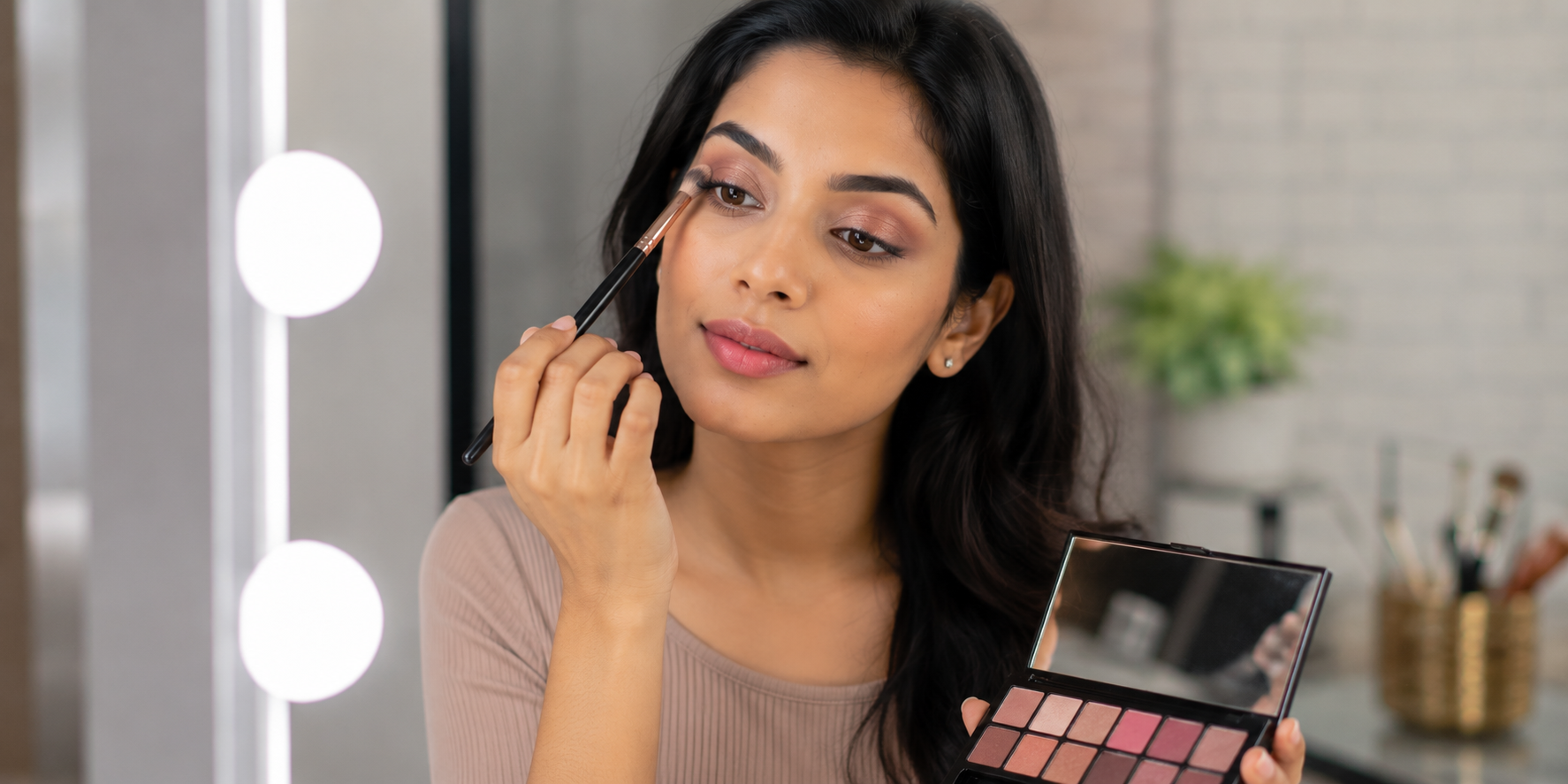
Eyeshadow palette selection plays a major role in creating beautiful eye makeup looks. While many people focus on buying expensive products, the real secret lies in understanding which colors work well together. The right combination can enhance your eye shape, complement your skin tone, and create a polished appearance for any occasion.
Whether you prefer natural makeup for daily wear or dramatic looks for special events, learning a few reliable color combinations can make your makeup routine much easier. This guide explores six versatile combinations that can help you get more value from your favorite palette.
Why Color Combinations Matter
A well-planned eyeshadow look creates depth and dimension. Instead of using a single shade across the eyelid, combining complementary colors helps define the eyes and makes the makeup appear more professional.
Moreover, different color pairings create different moods. Soft neutrals are perfect for office settings, while metallic shades can instantly elevate an evening look. Understanding these combinations allows you to use your makeup collection more effectively.

Understanding Eyeshadow Palette Finishes
Before exploring color combinations, it is important to understand finishes commonly found in an eyeshadow palette.
| Finish Type | Best Use | Appearance |
|---|---|---|
| Matte | Crease and transition shades | Smooth and natural |
| Shimmer | Lid and inner corner | Reflective glow |
| Satin | Everyday makeup looks | Soft sheen |
| Metallic | Party and evening looks | High shine |
| Glitter | Special occasions | Sparkling effect |
Using a mix of finishes often creates a more balanced and visually appealing eye makeup look.
6 Color Combinations to Try
Brown and Gold
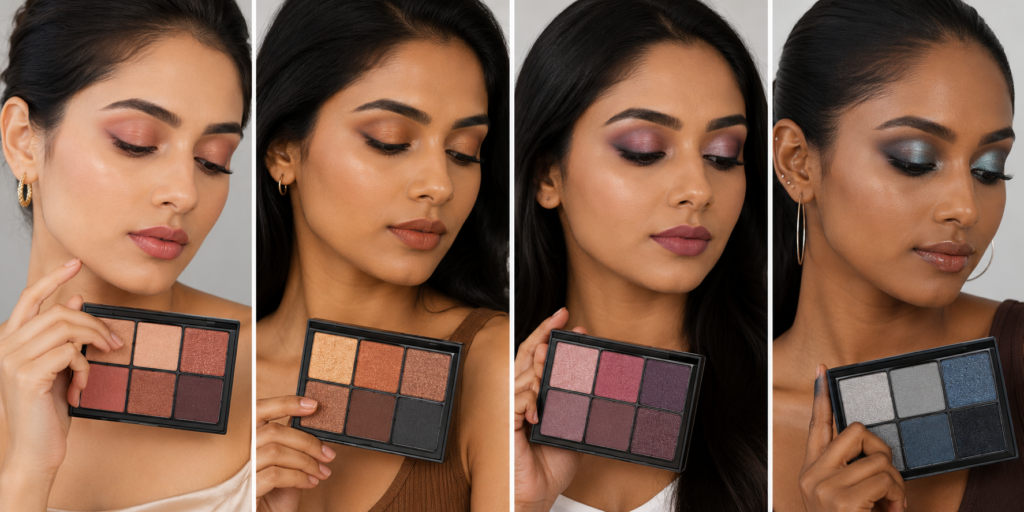
Brown and gold remain one of the most popular combinations in beauty. Brown adds depth to the crease, while gold brightens the eyelid and catches light beautifully.
This combination works well for weddings, festivals, and evening events. Additionally, it suits almost every skin tone, making it a reliable choice for beginners.
Pink and Mauve
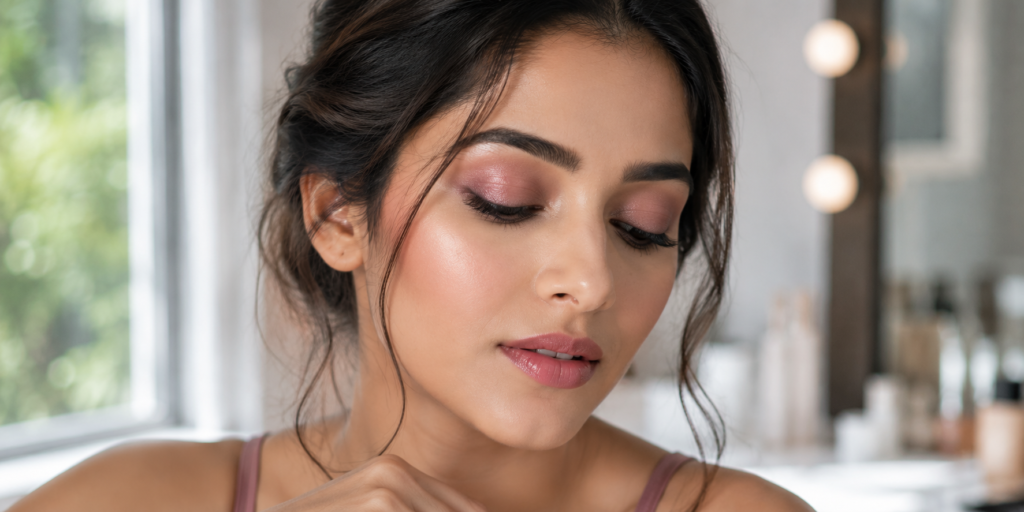
Pink and mauve create a soft, romantic appearance that works beautifully for daytime makeup.
Apply a light pink shade across the lid and blend mauve into the outer corner for definition. The result is fresh, feminine, and suitable for both casual and professional settings.
Bronze and Copper
Bronze and copper shades deliver warmth and richness. These colors are particularly flattering on medium and deeper skin tones.
A copper lid paired with a bronze crease creates a radiant effect that looks stunning in natural sunlight. Therefore, this combination is ideal for festive celebrations and evening gatherings.
Peach and Brown
Peach and brown offer a balanced everyday look. Peach brightens the eyes, while brown provides subtle structure.
This pairing is excellent for office wear because it looks polished without appearing overly dramatic. In addition, it complements a wide range of outfits and makeup styles.
Plum and Champagne
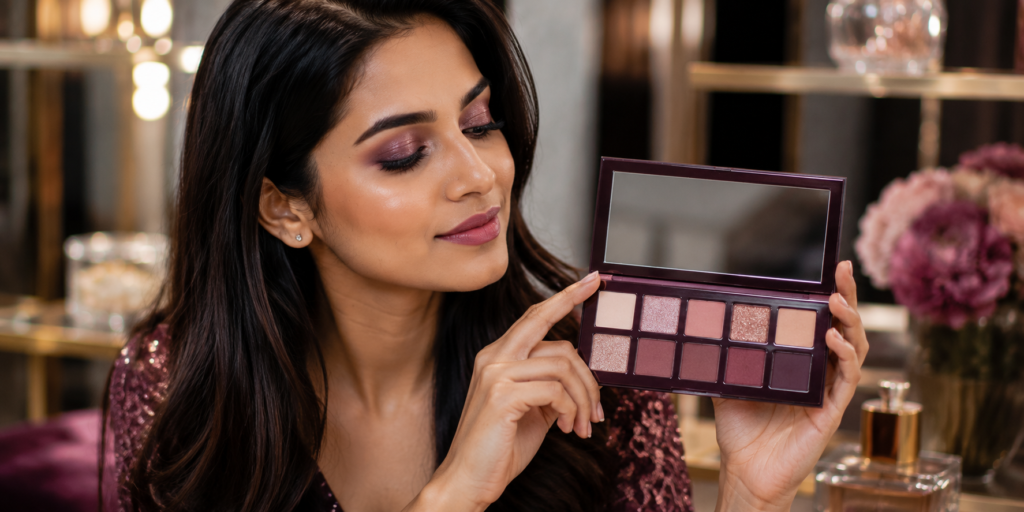
For those who want a sophisticated alternative to neutral shades, plum and champagne are excellent choices.
Plum creates depth around the outer corner, while champagne adds brightness to the center of the lid. Together, they produce an elegant look suitable for formal events and special occasions.
Grey and Silver
Grey and silver are perfect for creating modern, glamorous makeup looks.
Use grey as a transition shade and apply silver on the lid for a striking finish. This combination works especially well for evening events and contemporary fashion-inspired makeup styles.
The cool-toned effect creates a sophisticated appearance without looking overwhelming.
Choosing Colors for Your Skin Tone
Selecting colors that complement your complexion can enhance the final result significantly.
Fair Skin Tones
Soft pinks, taupes, mauves, and champagne shades often work beautifully. These colors provide definition while maintaining a natural appearance.
Medium Skin Tones
Warm browns, bronze, peach, copper, and gold shades usually look flattering. They enhance warmth and create a radiant finish.
Deep Skin Tones
Rich jewel tones, deep plum shades, metallic golds, and warm bronzes offer excellent contrast and depth.
Common Eyeshadow Palette Mistakes to Avoid
Even the best eyeshadow palette cannot deliver great results if common mistakes are ignored.
Using Too Many Colors
Applying too many shades can make the look appear cluttered. Instead, focus on two to four complementary colors.
Skipping Blending
Blending creates seamless transitions between shades. Harsh lines often make makeup look unfinished.
Ignoring Eye Shape
Different eye shapes benefit from different placement techniques. Understanding your eye structure can improve overall results.
Applying Too Much Product
Building color gradually usually produces better results than applying heavy pigment all at once.
Tips for Better Eyeshadow Palette Application
Start with a Primer
Primer helps improve color intensity and extends wear time throughout the day.
Use the Right Brushes
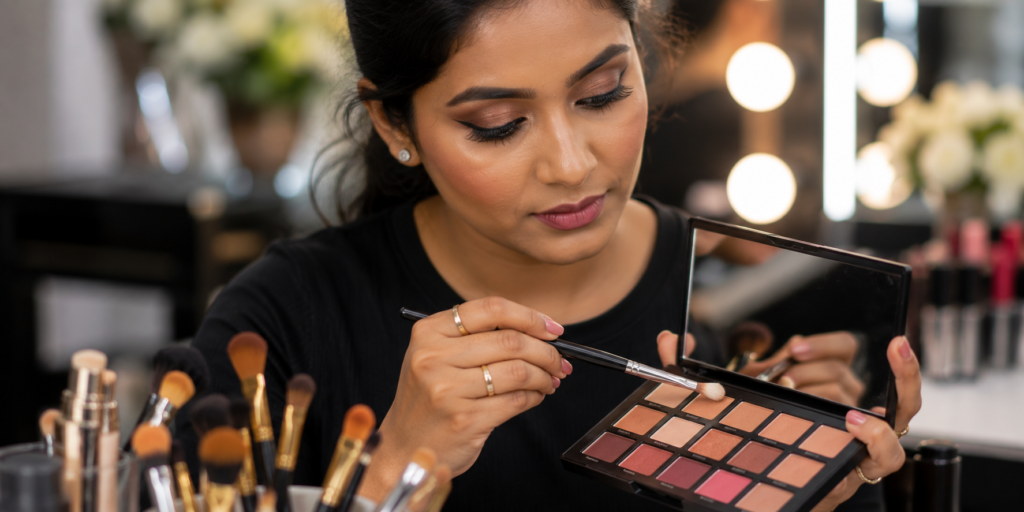
Different brushes serve different purposes. A blending brush, packing brush, and detail brush can significantly improve application quality.
Build Color Slowly
Applying thin layers allows better control and helps avoid uneven patches.
Highlight Strategically
Adding a light shimmer shade to the inner corner can make the eyes appear brighter and more awake.
Final Thoughts
An eyeshadow palette becomes much more useful when you understand how colors work together. Rather than purchasing multiple products, learning a few dependable combinations can help you create a variety of beautiful looks from a single palette.
From classic brown and gold to sophisticated plum and champagne, these six color combinations offer options for everyday wear, professional settings, and special occasions. By choosing shades that suit your skin tone and blending them carefully, you can achieve eye makeup that looks polished, balanced, and effortlessly stylish.
Brown and gold is often the easiest combination for beginners. It is versatile, easy to blend, and suitable for many occasions.
Most eye makeup looks require two to four shades. Using fewer colors often creates a cleaner and more professional result.
Gold, bronze, warm brown, champagne, and soft peach shades generally complement a wide range of skin tones and makeup styles.
