

Amarnath Yatra is one of the most sacred pilgrimages in India and holds great importance for devotees of Lord Shiva. Every year, thousands of pilgrims travel to the holy Amarnath Cave in Jammu and Kashmir to witness the naturally formed ice Shivling. Surrounded by the majestic Himalayas, this spiritual journey offers a unique combination of faith, adventure, and breathtaking natural beauty.
If you are planning the Amarnath Yatra for the first time, proper preparation is essential. From registration and route selection to packing and safety tips, this guide covers everything you need to know for a comfortable and memorable pilgrimage.
Why is Amarnath Yatra Special?
The Amarnath Cave is located at an altitude of about 3,888 meters above sea level. According to Hindu beliefs, Lord Shiva revealed the secret of immortality to Goddess Parvati inside this cave. The naturally formed ice Shivling is considered highly sacred and attracts devotees from across the country.
Apart from its religious significance, the journey also offers stunning mountain landscapes, glaciers, rivers, and peaceful surroundings that make it a memorable experience.

Best Time to Visit
The Amarnath Yatra is usually organized between June and August, depending on weather conditions. During this period, the trekking routes are open and suitable for pilgrims.
Before planning your trip, always check the official yatra schedule and weather forecast. Heavy rainfall or landslides can affect travel plans.
How to Register for Amarnath Yatra
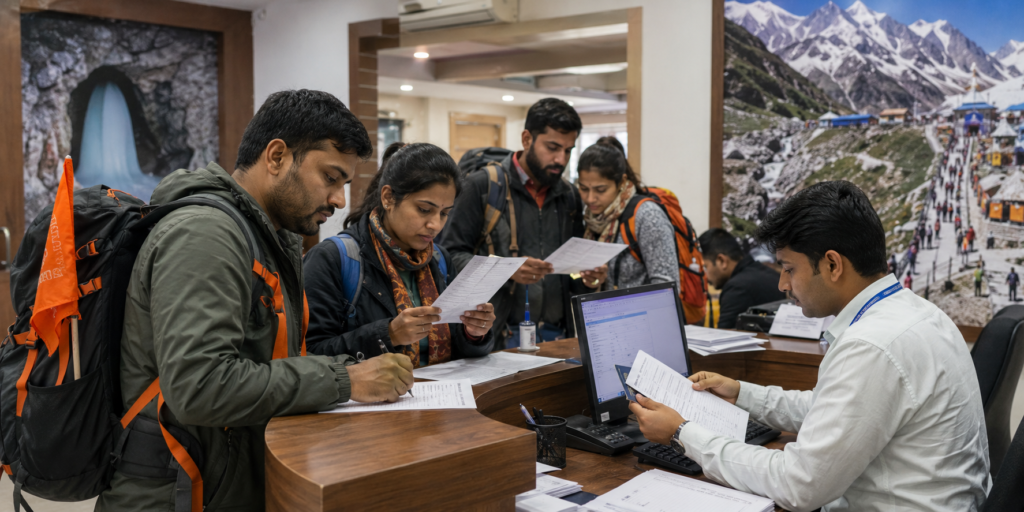
Registration is mandatory for every pilgrim. You can register through authorized bank branches or the official Shri Amarnathji Shrine Board website.
Before registration, keep these documents ready:
- Valid government ID
- Compulsory Health Certificate (CHC)
- Passport-size photographs
- Registration fee
After successful registration, keep your yatra permit safely throughout the journey.
Amarnath Yatra Routes
Pilgrims can choose between two major routes.
| Route | Distance | Difficulty | Suitable For |
|---|---|---|---|
| Pahalgam Route | Around 36–48 km | Moderate | First-time pilgrims |
| Baltal Route | Around 14 km | Challenging | Experienced trekkers |
The Pahalgam route is longer but offers gradual climbing and scenic views. The Baltal route is shorter but much steeper.
Essential Packing List
Packing wisely can make your journey more comfortable.
Carry:
- Warm jackets
- Thermal wear
- Waterproof raincoat
- Trekking shoes
- Woollen gloves and cap
- Personal medicines
- Water bottle
- Dry snacks
- Torch
- Power bank
Avoid carrying unnecessary luggage because you will need to walk long distances.

Travel Tips and Safety Guidelines
Your health and safety should always come first during the Amarnath Yatra.
- Start physical preparation at least one month before the journey.
- Walk at a comfortable pace.
- Stay hydrated throughout the trek.
- Follow instructions issued by security personnel.
- Do not ignore symptoms like dizziness or breathing difficulty.
- Keep emergency contact numbers handy.
- Respect the environment and avoid littering.
Proper planning helps you enjoy the pilgrimage without unnecessary stress.
Accommodation and Food
Accommodation is available at different camps along both trekking routes. Pilgrims can choose from tents, lodges, and government-arranged facilities.
Free community kitchens, known as langars, serve food at several locations during the yatra. You can also find tea, snacks, and essential supplies along the route.

Conclusion
Amarnath Yatra is much more than a pilgrimage. It is a journey of devotion, determination, and spiritual peace. Whether you choose the Pahalgam route or the Baltal route, proper planning, registration, physical fitness, and essential packing will help make your experience safe and memorable.
If you are planning the Amarnath Yatra this season, prepare in advance, follow official guidelines, and enjoy one of India’s most sacred spiritual journeys.
Yes. Every pilgrim must complete registration and obtain a valid permit before starting the journey.
The Pahalgam route is generally recommended because it has a gradual climb and offers a more comfortable trekking experience.
Yes, provided they meet the medical fitness requirements and carry a valid Compulsory Health Certificate before traveling.
