
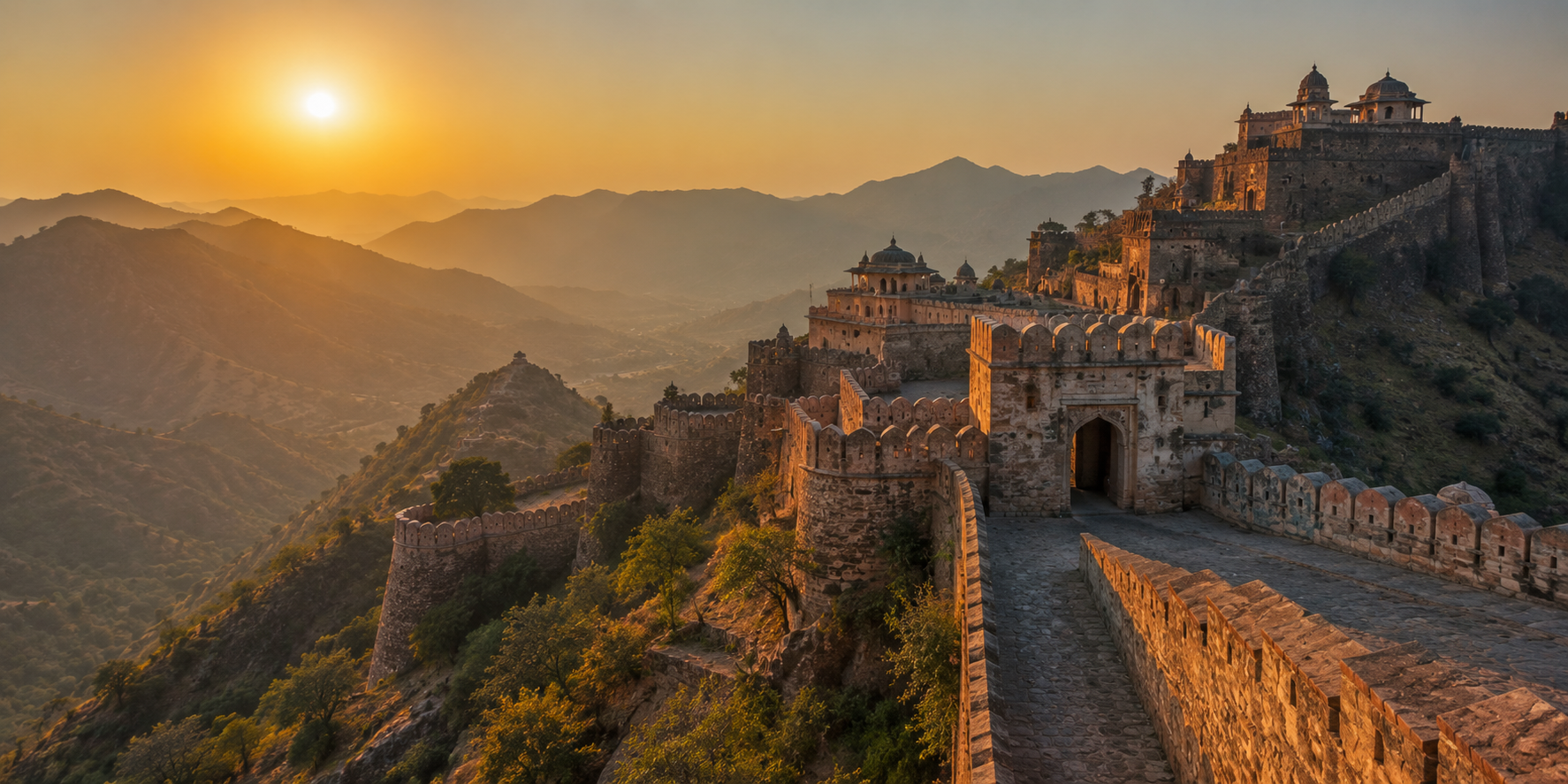
Kumbhalgarh Fort stands as one of the greatest symbols of Rajput courage, architectural excellence, and royal heritage in Rajasthan. Located in the rugged Aravalli Hills, this magnificent fort is famous for its massive defensive wall, historical significance, and breathtaking landscapes.
Built by Maharana Kumbha during the 15th century, the fort played a crucial role in protecting the Mewar Kingdom from invasions. Today, it attracts travelers from across India and the world who want to experience Rajasthan’s rich history and culture. Whether you are a history enthusiast, a photographer, or a travel lover, Kumbhalgarh Fort offers an unforgettable experience.
History of Kumbhalgarh Fort
The history of Kumbhalgarh Fort dates back to the 15th century when Maharana Kumbha, one of the most respected rulers of Mewar, commissioned its construction. The fort was built between 1443 and 1458 and served as a strong defensive stronghold for the kingdom.
Its strategic location on the Aravalli Hills made it difficult for enemies to attack. Over the centuries, the fort successfully resisted numerous invasions and remained an important center of Rajput power.
Another fascinating fact is that Kumbhalgarh Fort is the birthplace of Maharana Pratap, one of India’s most celebrated Rajput warriors. This connection further enhances the fort’s historical importance.
Importance in Mewar History
The fort acted as a safe refuge for Mewar rulers during times of conflict. Whenever nearby regions faced threats, the royal family often used Kumbhalgarh as a secure shelter due to its strong defenses and remote location.
Rajput Heritage and Royal Legacy
Kumbhalgarh Fort is deeply connected to the glorious legacy of the Rajputs. Every wall, gateway, and temple reflects the values of courage, honor, and dedication that defined Rajput culture.
The fort symbolizes the determination of the Mewar rulers to preserve their independence and protect their people. Visitors can still feel the grandeur of the royal era while exploring the fort complex.
Connection with Maharana Pratap
One of the most significant aspects of the fort is its association with Maharana Pratap. As the birthplace of this legendary ruler, Kumbhalgarh remains a source of pride for Rajasthan and Rajput history.
His bravery and resistance against powerful enemies continue to inspire generations across India.
Architectural Wonders of the Fort
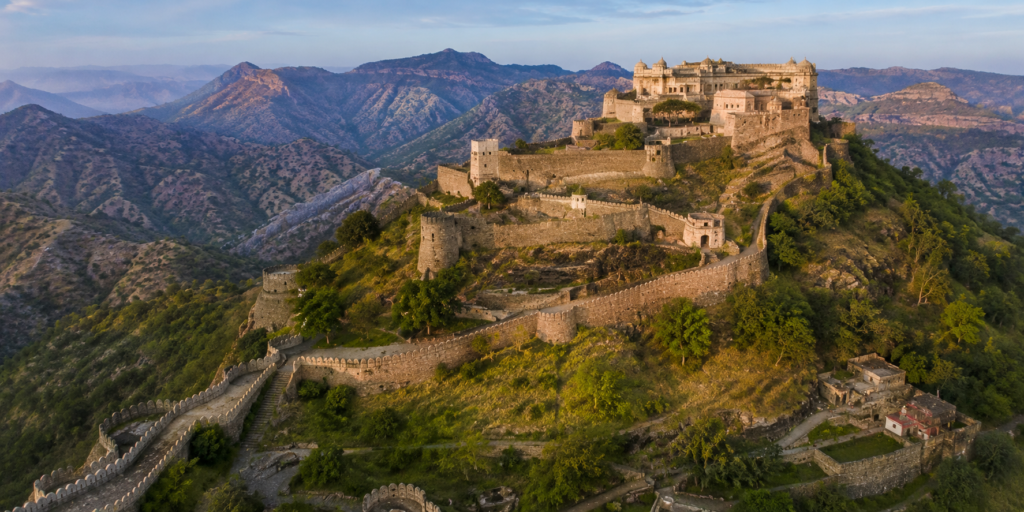
The architecture of Kumbhalgarh Fort is a masterpiece of medieval engineering. The fort covers a vast area and includes palaces, temples, gardens, and defensive structures.
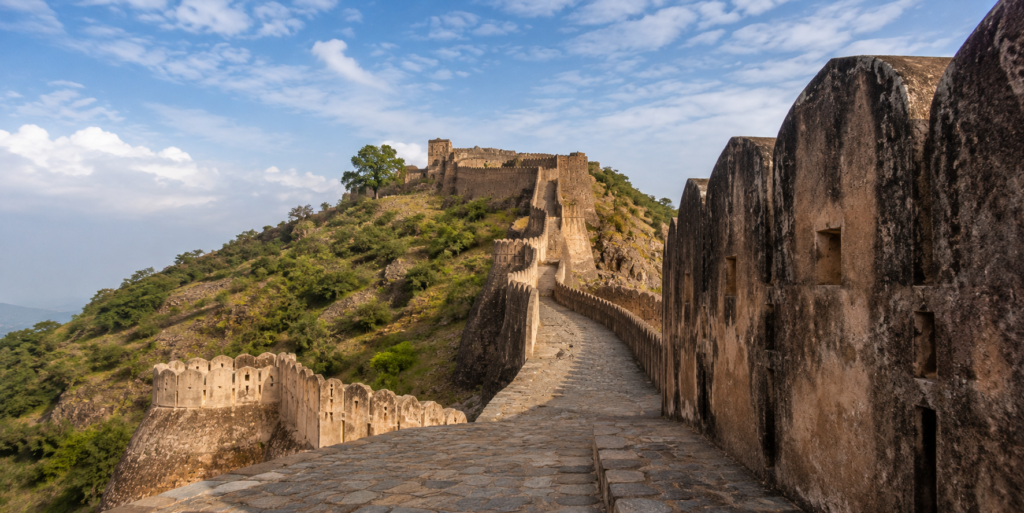
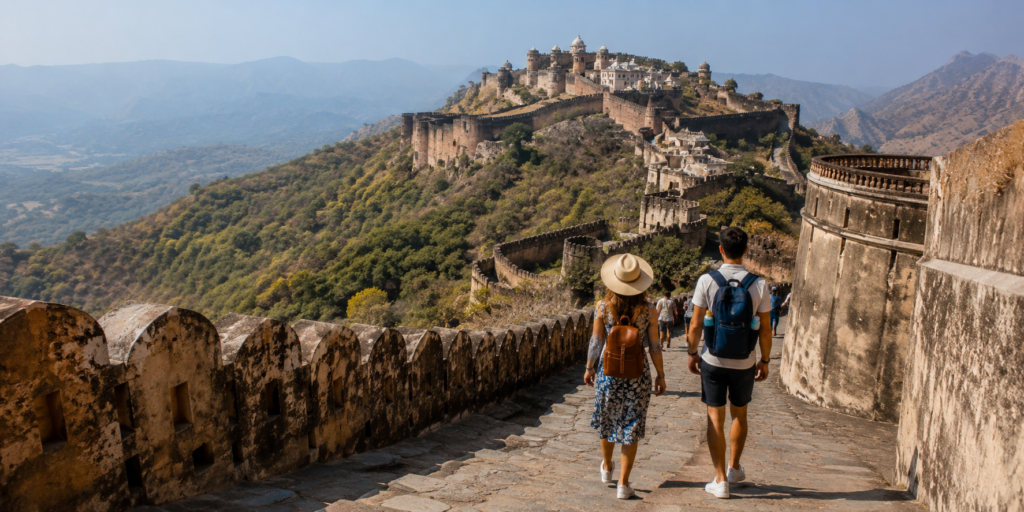
The most famous feature is its enormous wall, often referred to as the “Great Wall of India.” Stretching for approximately 36 kilometers, it is considered the second-longest continuous wall in the world after the Great Wall of China.
Massive Fortification Wall
The wall was designed to withstand attacks and provide security to the kingdom. Its width is so impressive that several horses could move side by side on certain sections.
Temples and Palaces
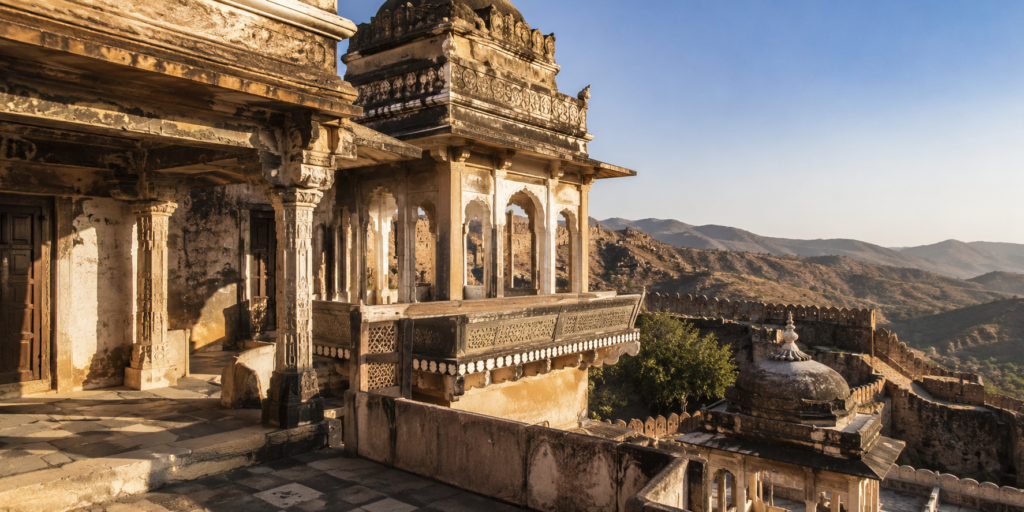
The fort complex contains more than 300 ancient temples dedicated to Hindu and Jain traditions. In addition, royal palaces within the fort display elegant Rajput architectural elements and intricate craftsmanship.
Top Attractions Inside Kumbhalgarh Fort
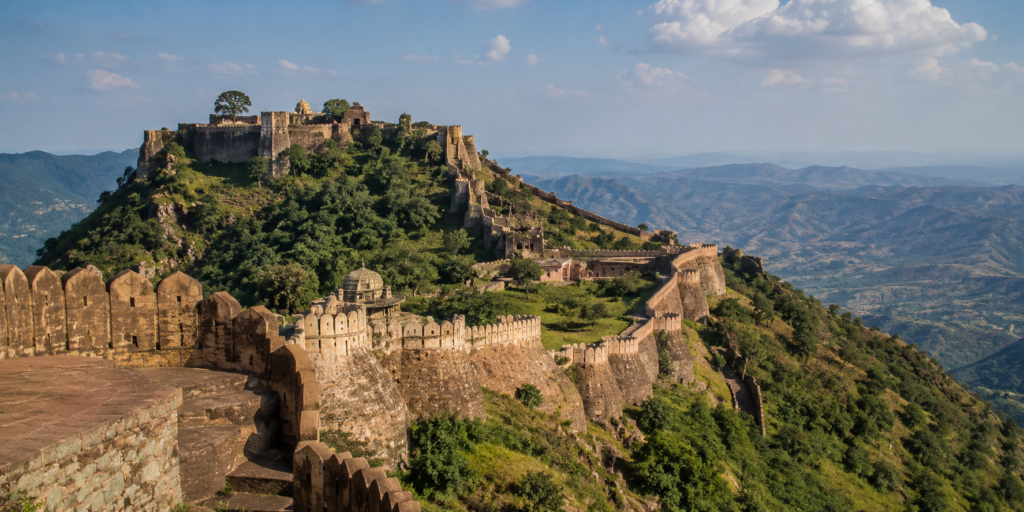
Visitors can spend several hours exploring the numerous attractions located within the fort complex.
| Attraction | Highlights |
|---|---|
| Badal Mahal | Beautiful palace with panoramic views |
| Kumbha Palace | Historic royal residence |
| Neelkanth Mahadev Temple | Ancient temple with remarkable architecture |
| Fort Walls | Spectacular defensive structure |
| Viewpoints | Stunning views of the Aravalli Hills |
Badal Mahal
Badal Mahal, also known as the Palace of Clouds, is situated at the highest point of the fort. The palace offers incredible views of the surrounding hills and valleys.
Neelkanth Mahadev Temple
This ancient temple is known for its large Shiva lingam and detailed stone carvings. It remains one of the most visited religious sites within the fort complex.
Travel Information for Visitors
Planning your visit properly can help you enjoy the fort more comfortably.
The nearest major city is Udaipur, which is approximately 85 kilometers away. Travelers can reach the fort by road through taxis, private vehicles, or local transportation.
Entry Timings
The fort generally remains open throughout the week, allowing visitors enough time to explore its attractions.
What to Carry
Carry comfortable walking shoes, drinking water, sunscreen, and a camera. Since the fort covers a large area, visitors should be prepared for moderate walking.
Best Time to Visit Kumbhalgarh Fort
The ideal time to visit Kumbhalgarh Fort is between October and March. During these months, the weather remains pleasant and suitable for sightseeing.
Winter mornings provide excellent visibility for photography, while evenings often offer spectacular sunset views over the Aravalli Hills.
Monsoon season also adds natural beauty to the surrounding landscape, making the region look vibrant and green.
Seasonal Travel Benefits
Winter offers comfortable temperatures and clear skies. On the other hand, the monsoon season provides lush scenery and a refreshing atmosphere.
Why Kumbhalgarh Fort Is a UNESCO World Heritage Site
Kumbhalgarh Fort forms part of the famous Hill Forts of Rajasthan recognized by UNESCO. This recognition highlights its cultural significance, architectural excellence, and historical value.
The fort preserves centuries of Rajput heritage and serves as an important example of medieval Indian military architecture.
Its remarkable construction techniques, strategic location, and well-preserved structures continue to attract scholars and tourists from around the world.
Conclusion
Kumbhalgarh Fort is much more than a historical monument. It represents the courage of Rajput rulers, the vision of Maharana Kumbha, and the rich heritage of the Mewar Kingdom. From its massive walls and royal palaces to its temples and panoramic viewpoints, every corner tells a story of Rajasthan’s glorious past.
Whether you are interested in history, architecture, photography, or cultural exploration, Kumbhalgarh Fort deserves a place on your Rajasthan travel itinerary.
Kumbhalgarh Fort is famous for its 36-kilometer-long wall, Rajput heritage, and its connection to Maharana Pratap. It is also a UNESCO World Heritage Site.
The fort was built by Maharana Kumbha during the 15th century as a strong defensive structure for the Mewar Kingdom.
The best time to visit is from October to March when the weather is pleasant and ideal for sightseeing and photography.
