
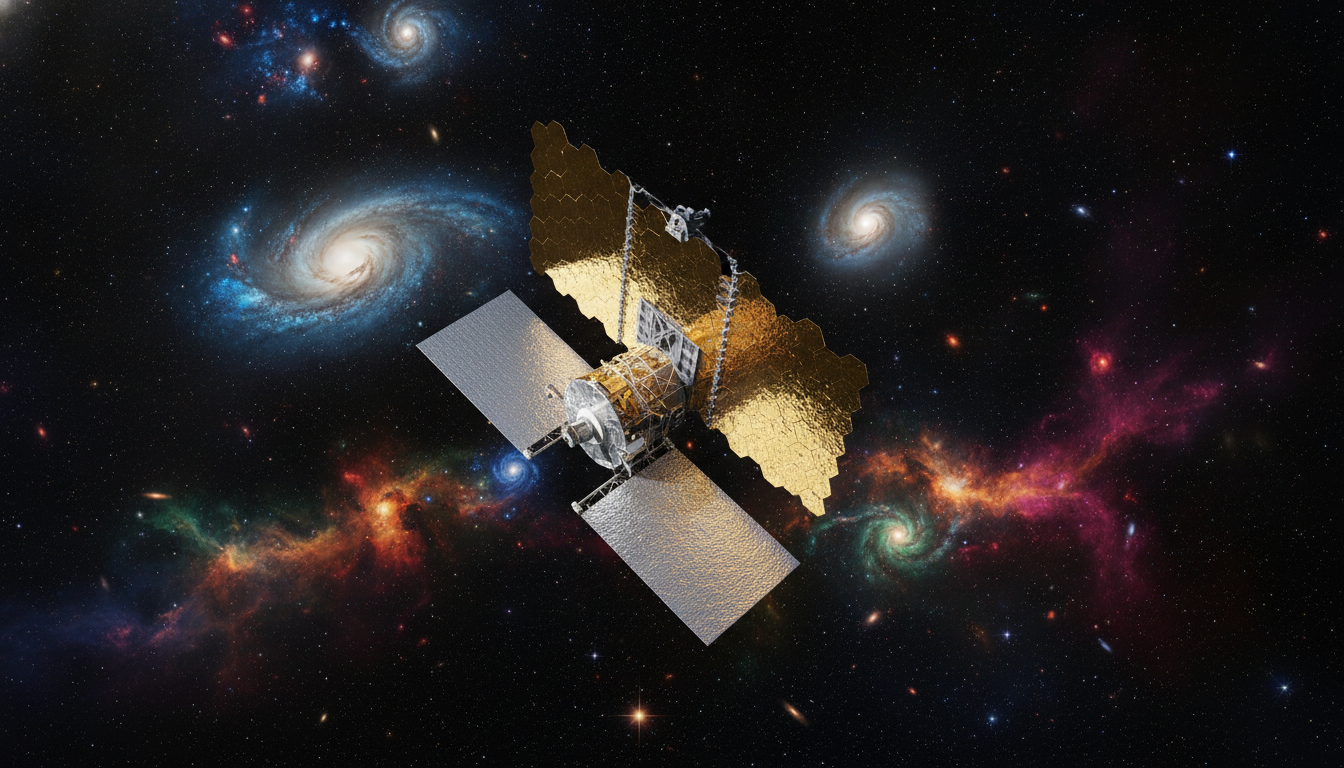
James Webb Telescope is one of the most advanced scientific instruments ever built, helping humanity explore parts of the universe that were previously beyond our reach. Developed through international collaboration, this powerful observatory has transformed modern astronomy by capturing detailed infrared images of distant galaxies, stars, and planets.
Since its launch, the telescope has provided scientists with valuable information about the early universe, the formation of galaxies, and the atmospheres of distant worlds. As a result, researchers now have a better understanding of how the cosmos evolved over billions of years. The telescope is not only expanding scientific knowledge but also shaping the future of space research.
What Is the James Webb Telescope?
The James Webb Space Telescope (JWST) is a next-generation space observatory designed to study the universe in infrared light. Unlike traditional optical telescopes, it can see through clouds of cosmic dust and observe extremely distant objects that formed shortly after the Big Bang.
The telescope operates from a location known as the second Lagrange point (L2), approximately 1.5 million kilometers from Earth. This position allows it to maintain stable temperatures and conduct highly sensitive observations.
Main Objectives of JWST
- Study the first galaxies formed after the Big Bang
- Understand star and planetary formation
- Analyze exoplanet atmospheres
- Explore black holes and cosmic evolution
- Capture high-resolution infrared images
Why the Telescope Is Revolutionary
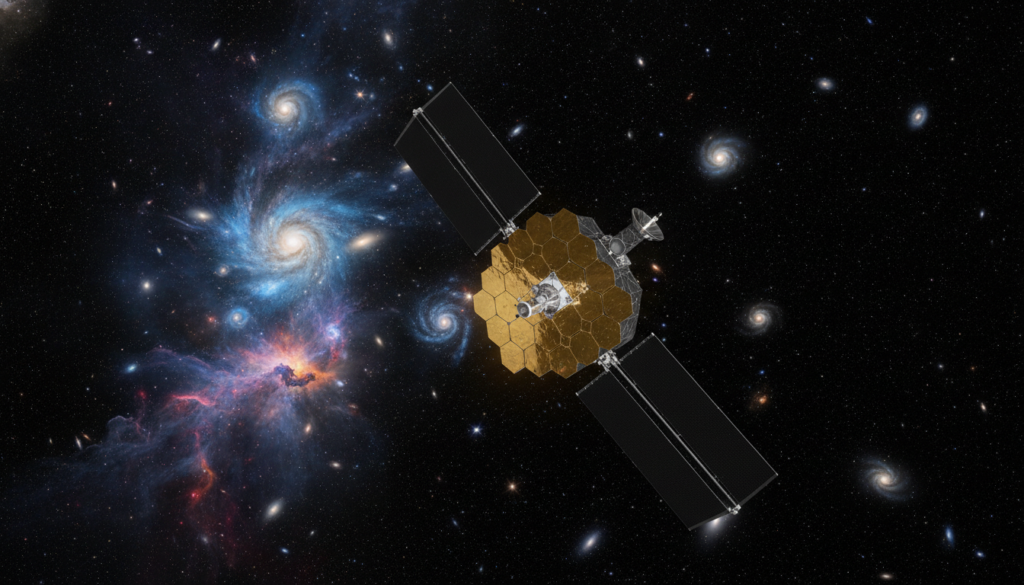
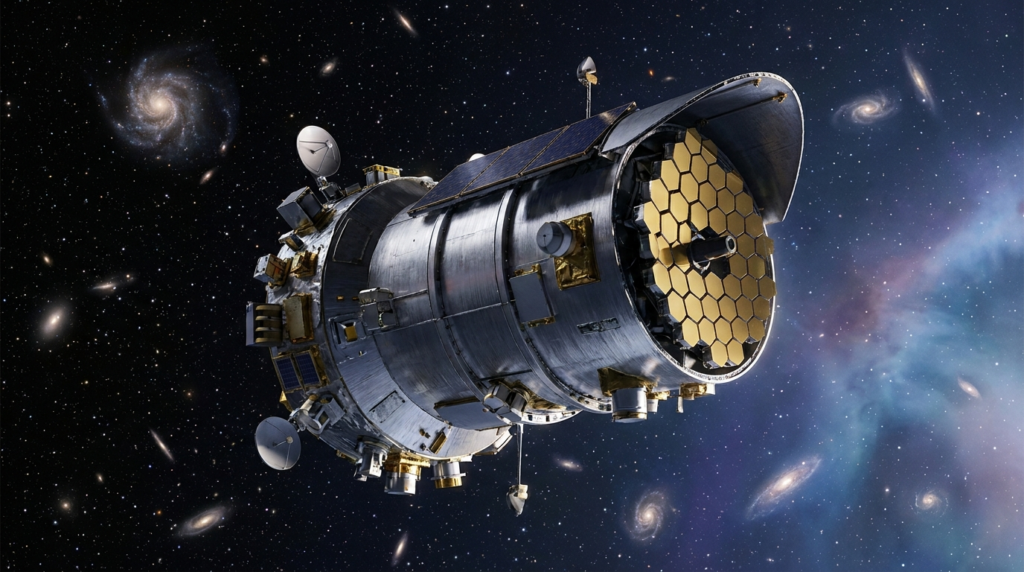
The telescope represents a major technological leap in astronomy. Its massive segmented mirror and advanced infrared instruments allow it to observe objects that older telescopes cannot detect.
Moreover, Webb can collect significantly more light than many previous observatories. This capability enables astronomers to study faint and distant cosmic structures with exceptional detail.
Advanced Technologies
Large Primary Mirror
The telescope features an approximately 6.5-meter gold-coated mirror, providing remarkable light-gathering power.
Infrared Observation Capability
Infrared technology allows scientists to observe regions hidden behind dust clouds and detect ancient galaxies.
High-Precision Instruments
Specialized sensors provide detailed measurements of temperature, chemical composition, and atmospheric conditions.
Key Discoveries So Far
Since becoming operational, the observatory has delivered groundbreaking findings that continue to influence scientific research.
Major Scientific Achievements
| Discovery Area | Scientific Importance |
|---|---|
| Early Galaxies | Understanding cosmic evolution |
| Exoplanet Atmospheres | Search for potentially habitable worlds |
| Star Formation | Insights into stellar birth processes |
| Black Hole Activity | Better understanding of galaxy growth |
| Cosmic Dust Analysis | Reveals chemical building blocks of space |
Scientists have observed galaxies that existed surprisingly early in the universe’s history. These findings are encouraging researchers to refine existing theories about galaxy formation.
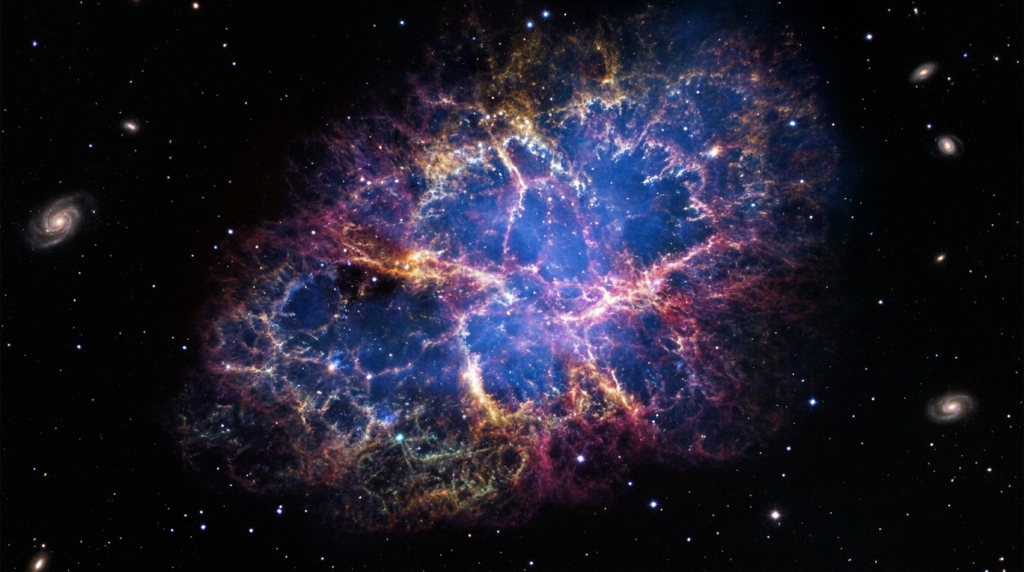
In addition, Webb has captured stunning images of stellar nurseries where new stars are actively forming.
James Webb Telescope vs Hubble Space Telescope
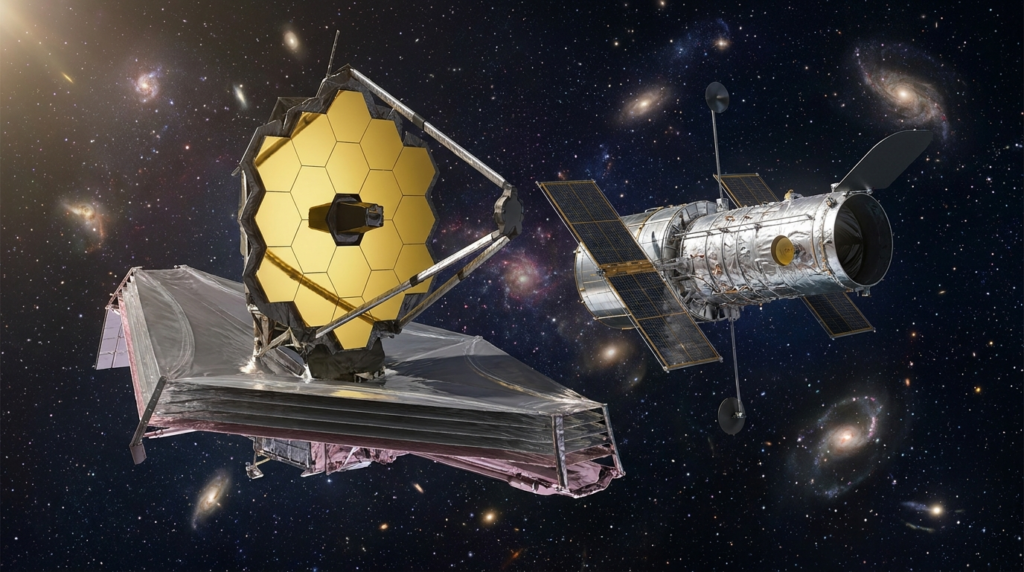
Both telescopes are remarkable scientific achievements, but they serve different purposes.
Key Differences
Observation Range
Hubble primarily observes visible and ultraviolet light, while Webb specializes in infrared observations.
Mirror Size
Webb’s larger mirror allows it to gather more light and observe fainter objects.
Distance Coverage
The James Webb Telescope can study objects that formed much earlier in cosmic history.
Although Hubble remains valuable for many scientific missions, Webb extends humanity’s ability to explore deeper into space and further back in time.
Role in Exoplanet Research
One of the most exciting areas of Webb’s mission involves studying exoplanets. These are planets located outside our solar system.
Scientists can analyze the light passing through an exoplanet’s atmosphere and identify gases such as water vapor, carbon dioxide, and methane. This process helps researchers determine whether a planet may support conditions suitable for life.
Why Exoplanet Studies Matter
Search for Habitable Worlds
Researchers are looking for planets with environments similar to Earth.
Understanding Planet Formation
Webb helps scientists learn how planetary systems develop over time.
Atmospheric Analysis
Detailed measurements reveal the chemical makeup of distant worlds.
The telescope’s ability to examine planetary atmospheres is expected to play a major role in future astrobiology research.
How It Will Shape Future Space Research
The future impact of the James Webb Telescope extends far beyond current discoveries. The data collected today will influence scientific studies for decades.
Researchers expect Webb to contribute to several important fields:
Future Research Areas
Origins of the Universe
Scientists hope to learn more about events that occurred shortly after the Big Bang.
Dark Matter and Cosmic Structure
Future observations may provide clues about some of the universe’s greatest mysteries.
Advanced Planetary Science
The telescope will continue identifying potentially habitable worlds and studying their atmospheres.
Support for Future Missions
Webb’s findings will guide upcoming space observatories and exploration programs.
As scientific knowledge grows, the telescope will remain one of the most valuable tools in astronomy.
Challenges and Limitations
Despite its extraordinary capabilities, the telescope has certain limitations.
It cannot observe every wavelength of light, and some scientific questions require additional instruments. Furthermore, maintenance missions are currently not possible due to its distant location.
However, engineers designed the observatory to operate efficiently for many years, maximizing its scientific contribution.
Conclusion
The James Webb Telescope is transforming our understanding of the universe and opening new possibilities for scientific discovery. From studying the earliest galaxies to analyzing distant exoplanets, its contributions are reshaping modern astronomy.
As technology advances and new observations continue to emerge, the James Webb Telescope will remain at the center of space exploration. Its discoveries are helping humanity answer some of the biggest questions about the origins, evolution, and future of the universe.
The James Webb Telescope is used to study distant galaxies, stars, planets, and cosmic phenomena through advanced infrared observations.
It allows scientists to observe parts of the universe that were previously invisible, helping improve our understanding of cosmic history and planetary systems.
The telescope cannot directly detect life, but it can analyze planetary atmospheres and identify chemicals that may indicate potentially habitable conditions.
