
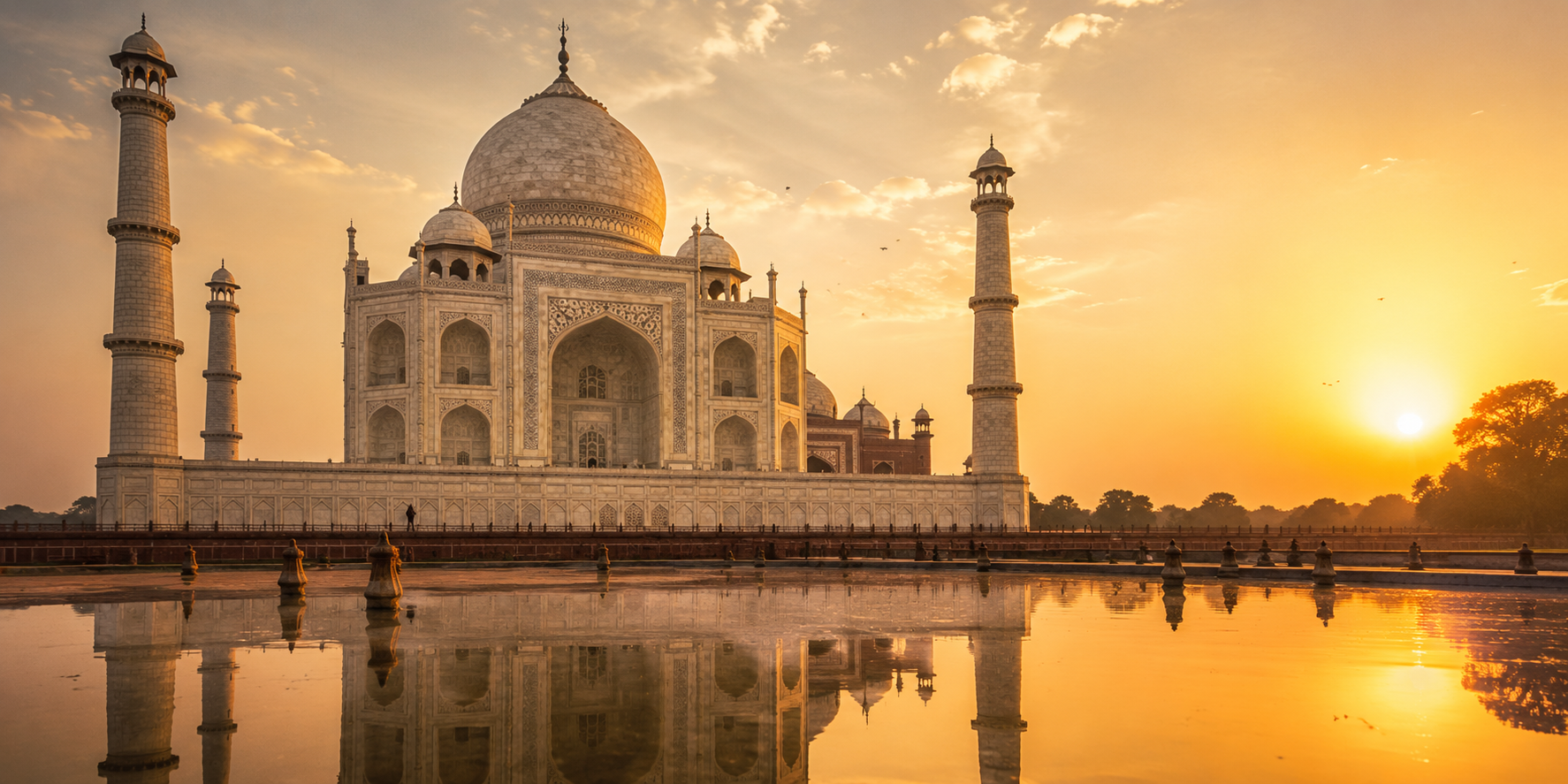
Taj mahal is one of the most iconic travel destinations in the world. Located in Agra, this magnificent white marble monument represents eternal love, timeless architecture, and the rich history of India. Every year, millions of travelers visit the site to admire its beauty and experience its peaceful atmosphere.
Whether you are planning your first trip or simply exploring India’s heritage destinations, this guide will help you understand everything about the Taj Mahal. From ticket booking to photography tips, here is a complete travel experience for modern travelers.
Why the Taj Mahal Is Famous
The Taj Mahal is recognized as one of the Seven Wonders of the World and a UNESCO World Heritage Site. Built by Mughal Emperor Shah Jahan in memory of his wife Mumtaz Mahal, the monument is admired for its emotional story and breathtaking architecture.
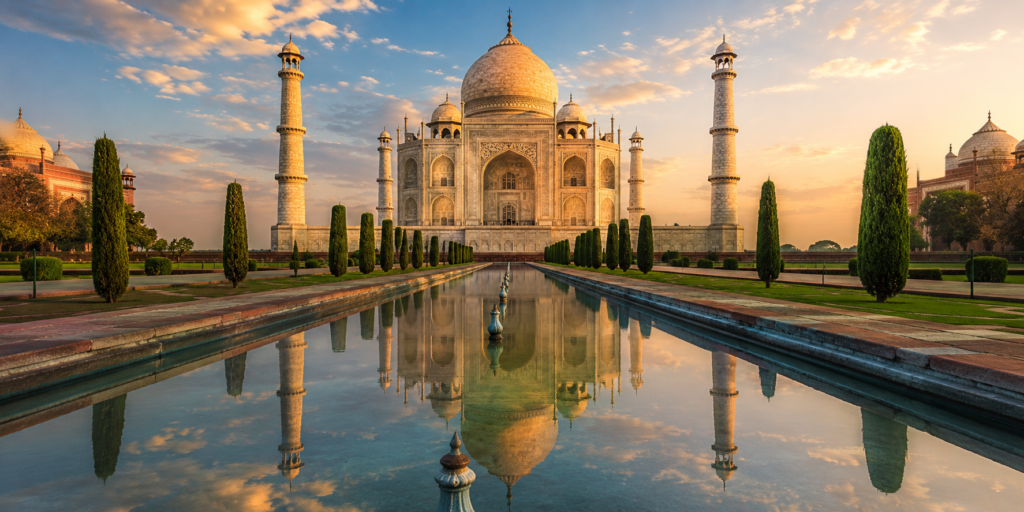
The white marble changes color throughout the day depending on sunlight. During sunrise, the structure looks soft pink, while moonlight gives it a silver glow. This magical visual experience makes the Taj Mahal unforgettable for travelers.
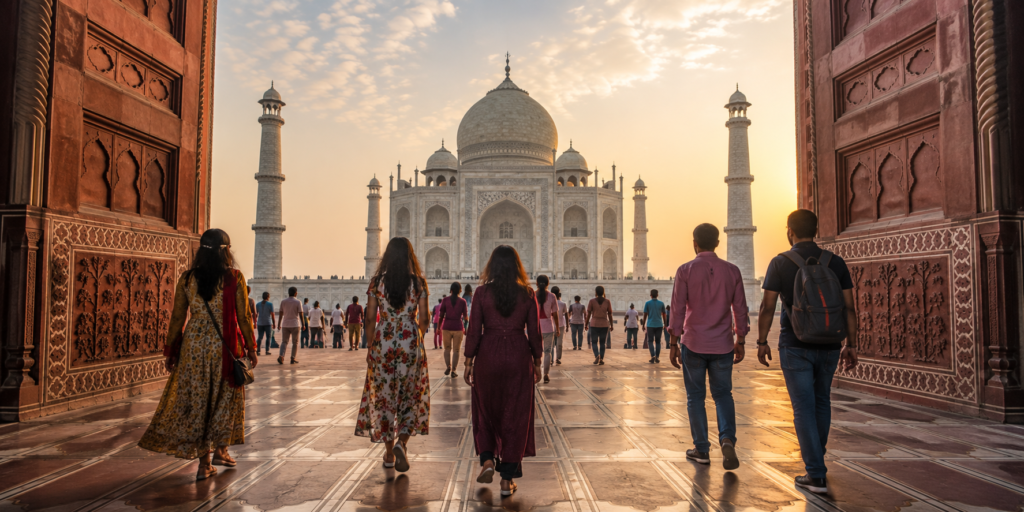
Best Time to Visit the Taj Mahal
The ideal time to visit the Taj Mahal is between October and March. During these months, the weather in Agra remains comfortable and pleasant for sightseeing.
Summer months can become extremely hot, especially during the afternoon. Therefore, most travelers prefer early morning visits. Sunrise offers cooler weather, fewer crowds, and better photography opportunities.
If possible, avoid weekends and public holidays because the monument becomes crowded quickly.
| Season | Experience | Recommended Time |
|---|---|---|
| Winter | Pleasant weather and clear views | October – March |
| Summer | Hot afternoons and bright sunlight | Early morning only |
| Monsoon | Fresh atmosphere with cloudy skies | Moderate tourism season |
Taj Mahal Timings and Entry Information
The Taj Mahal generally opens at sunrise and closes before sunset. Friday remains closed for regular tourist visits because prayers are conducted at the mosque inside the complex.
Online ticket booking is highly recommended because it saves time and avoids long queues. Moreover, carrying valid identification is important for entry verification.
Important Visitor Guidelines
- Carry a water bottle and comfortable shoes
- Avoid carrying large bags inside
- Follow photography restrictions in certain areas
- Arrive early for a peaceful experience
Many travelers also hire local guides to understand the history and hidden details of the monument.
History Behind the Monument
The construction of the Taj Mahal started in 1632 and took more than 20 years to complete. Shah Jahan built it as a tribute to Mumtaz Mahal after her death during childbirth.
More than 20,000 artisans and craftsmen worked on the project. Marble was transported from Rajasthan, while precious stones were brought from different regions of Asia.
Today, the monument stands not only as a symbol of love but also as an example of extraordinary craftsmanship and artistic excellence.
Architectural Beauty of the Taj Mahal
The architecture of the Taj Mahal combines Persian, Islamic, and Indian styles. Its perfect symmetry and marble craftsmanship continue to inspire architects around the world.
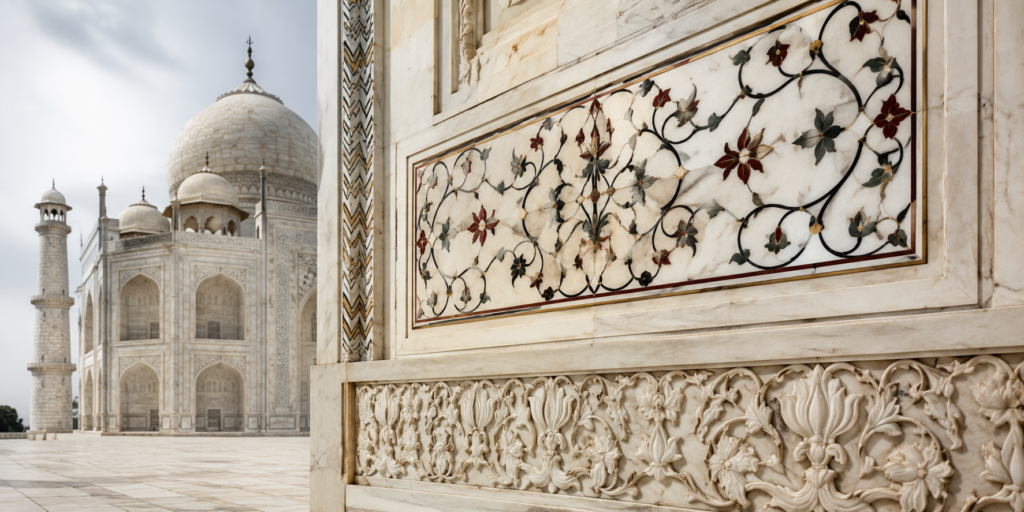
The central dome rises beautifully above the monument, while four minarets stand gracefully around it. Intricate marble inlay work using semi-precious stones adds elegance to every corner of the structure.
Unique Architectural Features
Symmetrical Design
Every part of the Taj Mahal follows balanced proportions, creating a visually harmonious structure.
Marble Inlay Artwork
Colorful gemstones are embedded into white marble to create floral patterns and decorative calligraphy.
Reflection Pool
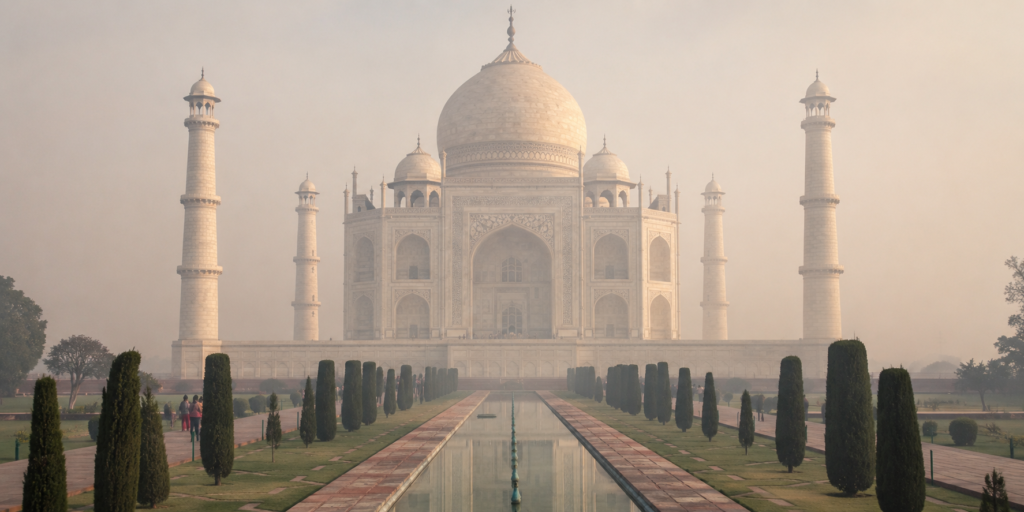
The long reflecting pool at the entrance creates one of the most photographed views in India.
Best Photography Spots Around the Taj Mahal
Photography lovers can capture stunning images from several locations around the monument. Sunrise remains the best time because the lighting appears soft and natural.
The main entrance gate offers a dramatic first view of the Taj Mahal. In addition, Mehtab Bagh provides beautiful sunset photography opportunities from across the Yamuna River.
Photography Tips
- Use natural morning light for softer colors
- Capture reflection shots near the pool
- Avoid crowded areas during peak hours
- Use wide-angle shots for full architecture views
Travel photographers often recommend visiting during weekdays for cleaner compositions and peaceful surroundings.
Travel Tips for First-Time Visitors
Planning your visit properly can improve the entire experience. Agra is well connected by road, train, and air from major Indian cities.
Practical Travel Advice
Book Tickets Online
Online booking reduces waiting time and provides faster entry access.
Start Early
Morning visits help you avoid heat and heavy tourist crowds.
Wear Comfortable Clothing
Light clothing and comfortable walking shoes are recommended because the complex is large.
Respect Cultural Guidelines
The Taj Mahal is a historical and cultural monument. Therefore, maintaining cleanliness and respectful behavior is important.
Nearby Attractions in Agra
Agra offers several historical attractions beyond the Taj Mahal. Travelers often combine multiple destinations in one trip.
Popular Places to Visit
Agra Fort
A massive Mughal fort known for its royal halls and historical significance.
Mehtab Bagh
A peaceful garden offering panoramic views of the Taj Mahal from across the river.
Fatehpur Sikri
An ancient Mughal city located near Agra with impressive red sandstone architecture.
Exploring these locations provides a deeper understanding of Mughal history and Indian heritage.
Conclusion
The taj mahal continues to inspire travelers with its timeless beauty, emotional history, and extraordinary architecture. From sunrise photography to peaceful garden walks, every corner of this monument offers a memorable experience.
Whether you are interested in history, architecture, or cultural travel, the Taj Mahal remains one of the most rewarding destinations in India. Planning your visit carefully will help you enjoy every moment of this iconic landmark.
The best time to visit is between October and March when the weather remains pleasant and comfortable for sightseeing and photography.
Yes, visitors can book tickets online to avoid long queues and save time during entry.
Most travelers spend around 2–4 hours exploring the monument, gardens, and nearby photography spots comfortably.
