

Artificial intelligence is rapidly changing the way people live, work, and interact with technology. From voice assistants and recommendation systems to healthcare automation and smart business tools, AI has become an important part of modern life. Today, companies, students, creators, and even small businesses are using artificial intelligence to save time, improve efficiency, and make better decisions.
The growth of AI technology is also creating new opportunities across industries. Whether it is healthcare, education, marketing, or customer service, artificial intelligence is helping organizations become faster and smarter. As a result, understanding how AI works and where it is heading has become more important than ever.
What Is Artificial Intelligence?
Artificial intelligence refers to computer systems that can perform tasks normally requiring human intelligence. These tasks include learning, problem-solving, decision-making, language understanding, and image recognition.
AI systems use data, algorithms, and machine learning models to improve their performance over time. Unlike traditional software, artificial intelligence can analyze patterns and make predictions based on large amounts of information.
Today, AI is used in smartphones, online shopping platforms, navigation apps, virtual assistants, and smart home devices. Therefore, many people interact with AI every day without even realizing it.
Types of Artificial Intelligence
There are different forms of AI technology currently being used worldwide:
| Type of AI | Main Purpose | Example |
|---|---|---|
| Narrow AI | Performs specific tasks | Voice assistants |
| Machine Learning | Learns from data patterns | Netflix recommendations |
| Generative AI | Creates content and media | AI chatbots |
| Computer Vision | Understands images and videos | Facial recognition |

How Artificial Intelligence Works
Artificial intelligence works by collecting and analyzing large amounts of data. AI systems use algorithms to identify patterns and make predictions based on that information. Machine learning, which is a major branch of AI, allows systems to improve automatically through experience.
For example, streaming platforms analyze viewing habits to recommend movies and shows. Similarly, online stores use AI algorithms to suggest products based on user behavior and preferences.
Deep learning is another important part of artificial intelligence. It uses neural networks that function similarly to the human brain. As a result, AI can now recognize speech, understand languages, and even generate realistic images.
Role of Machine Learning in AI
Machine learning helps AI systems become smarter over time. Instead of being manually programmed for every task, AI learns from examples and improves its accuracy continuously.
This technology is widely used in fraud detection, medical diagnosis, search engines, and digital marketing campaigns. Moreover, businesses are increasingly using machine learning to analyze customer behavior and automate repetitive tasks.

Artificial Intelligence in Daily Life
Artificial intelligence has become deeply integrated into daily routines. Many common applications already depend on AI-powered systems to improve user experience and convenience.
Voice assistants like Siri and Google Assistant use natural language processing to answer questions and complete tasks. Navigation apps analyze traffic data in real time to provide faster travel routes.
Social media platforms also use artificial intelligence to personalize feeds, detect spam, and recommend content based on user interests. In addition, AI chatbots are helping businesses provide 24/7 customer support.
Smart Homes and AI Technology
Smart home devices are becoming increasingly popular because of artificial intelligence. Devices such as smart speakers, automated lighting systems, and security cameras can learn user preferences and respond automatically.
For example, AI-powered thermostats can adjust room temperatures based on daily routines. Similarly, security systems can recognize unusual activity and send alerts instantly.
These innovations are improving convenience, energy efficiency, and home security for millions of people worldwide.

Benefits of Artificial Intelligence
Artificial intelligence offers several advantages across different industries and everyday applications. One major benefit is automation. AI can perform repetitive tasks faster and more accurately than humans.
Businesses are using AI to improve customer service, manage inventory, analyze data, and optimize marketing strategies. As a result, companies can save both time and operational costs.
Another important advantage is better decision-making. AI systems can process massive amounts of data quickly, helping organizations identify trends and make informed decisions.
AI in Healthcare and Education
Healthcare is one of the fastest-growing sectors for artificial intelligence. AI-powered tools help doctors detect diseases, analyze medical images, and recommend treatment plans.
In education, AI is helping students learn more effectively through personalized learning platforms and virtual tutoring systems. Therefore, both teachers and students benefit from smarter educational experiences.

Industries Using AI Technology
Artificial intelligence is now being adopted by almost every major industry. Companies are using AI to improve efficiency, customer experiences, and operational performance.
The finance industry uses AI for fraud detection, risk analysis, and automated trading systems. Retail companies rely on AI for personalized recommendations and inventory management.
Similarly, digital marketing agencies use artificial intelligence for SEO analysis, content creation, audience targeting, and campaign optimization. This helps brands reach the right customers more effectively.
AI in Transportation
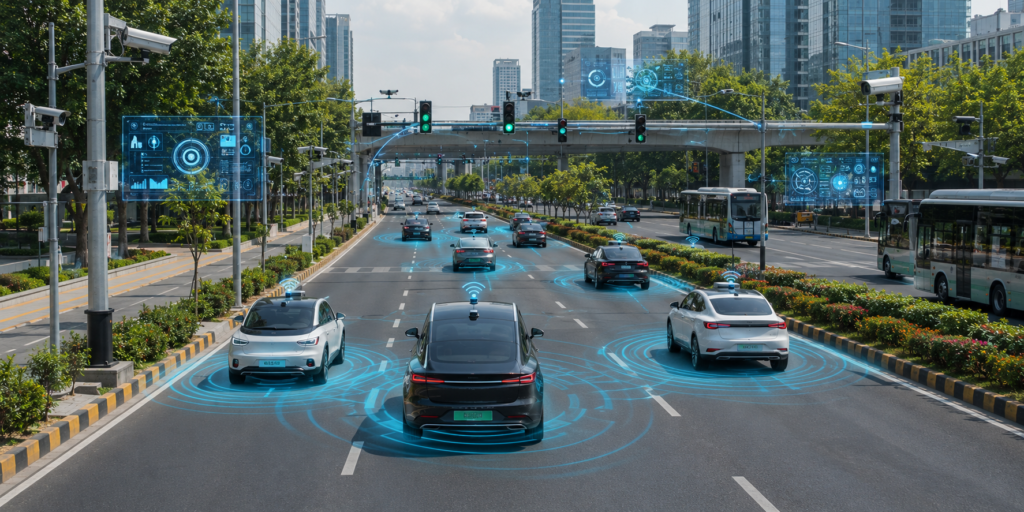
Transportation companies are investing heavily in AI-powered systems. Self-driving technology, smart traffic management, and predictive maintenance are becoming more common.
Ride-sharing apps also use AI to calculate fares, optimize routes, and predict demand during peak hours. Consequently, transportation systems are becoming smarter and more efficient.
Challenges and Risks of AI
Despite its advantages, artificial intelligence also presents several challenges. One major concern is data privacy. AI systems often require large amounts of personal data, which raises security and ethical concerns.
Job displacement is another important issue. Automation may replace some traditional roles, especially repetitive and manual jobs. However, it is also creating new opportunities in technology and digital industries.
Bias in AI systems is another challenge. If training data contains errors or discrimination, AI models may produce unfair outcomes. Therefore, companies must focus on responsible AI development and ethical practices.
Importance of Responsible AI
Responsible AI means developing systems that are transparent, secure, and fair for everyone. Governments and technology companies are working to create regulations that ensure AI is used safely and ethically.
In addition, businesses should educate employees and users about how AI systems work and how their data is being used.
The Future of Artificial Intelligence
The future of artificial intelligence looks extremely promising. AI technology is expected to become more advanced, accessible, and integrated into everyday life.
Future innovations may include smarter healthcare systems, advanced robotics, intelligent virtual assistants, and highly personalized digital experiences. Moreover, AI could play a major role in solving global challenges such as climate change, disease prevention, and resource management.
At the same time, organizations will need to balance innovation with ethical responsibility. Building trustworthy AI systems will be essential for long-term success.
As AI continues to evolve, people who understand and adapt to these technologies will likely gain significant advantages in education, careers, and business growth.
Conclusion
Artificial intelligence is shaping the future of technology and transforming industries across the world. From healthcare and education to marketing and transportation, AI is improving efficiency, automation, and decision-making in countless ways.
Although there are challenges related to privacy, ethics, and employment, the benefits of artificial intelligence continue to grow rapidly. Businesses and individuals who embrace AI technology responsibly will be better prepared for the future digital economy.
Artificial intelligence is a technology that enables machines and software to perform tasks that normally require human thinking, learning, and decision-making abilities.
AI is used in voice assistants, navigation apps, online shopping recommendations, smart home devices, social media algorithms, and customer support chatbots.
Artificial intelligence improves automation, saves time, increases efficiency, enhances decision-making, and helps businesses provide better customer experiences.
